
Some places fade slowly, their significance dwindling until they become little more than a footnote in history. Others disappear in an instant—wiped out by war, natural disasters, or economic collapse. But what does it feel like to stand in a place that, by all practical definitions, no longer exists? What can we learn from walking through towns that have been abandoned, reclaimed by nature, or left to crumble?
We’ve traveled to a few of these places—destinations that were once thriving but have now been swallowed by time. Each one left us with a mix of awe, sadness, and deep curiosity. Even though these places are no longer inhabited as they once were, their stories remain. And in some cases, they serve as a warning.
Kolmanskop, Namibia: A Town Swallowed by Sand
Driving through the vast, barren landscape of the Namib Desert, we weren’t sure what to expect from Kolmanskop. A German colonial town built during the diamond rush of the early 1900s, it had once been one of the wealthiest settlements in Africa, complete with European-style mansions, a hospital, and even a ballroom. Now, it stands as a ghost town, half-buried beneath dunes.
Walking through the abandoned buildings, we saw doorways nearly filled with sand, their interiors slowly disappearing beneath the desert’s encroaching grip. The silence was suffocating—no birds, no wind, nothing but the crunch of our footsteps against the sand-covered floors.
What struck us the most was how quickly a place could be erased. Kolmanskop was abandoned in the 1950s, yet it looked as though centuries had passed. The desert does not wait for history—it reclaims it.
Pripyat, Ukraine: The City That Time Froze
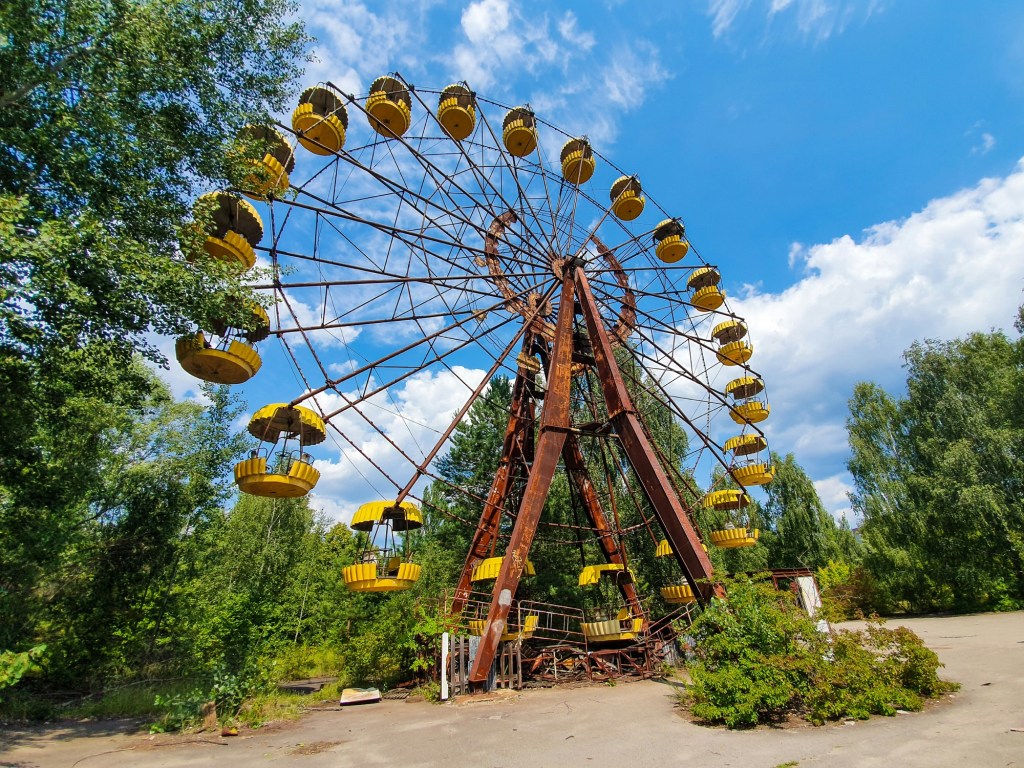
Kolmanskop faded gradually, but Pripyat disappeared in an instant. When the Chernobyl nuclear reactor exploded in 1986, the city’s 50,000 residents were evacuated overnight, leaving behind homes, schools, and entire lives they assumed they’d return to.
Visiting Pripyat in the winter made the eerie stillness even more pronounced. A rusting Ferris wheel stood motionless in the town square, its yellow gondolas never having carried a single rider. In an abandoned school, desks remained exactly as they were left, books still open to the last lesson.
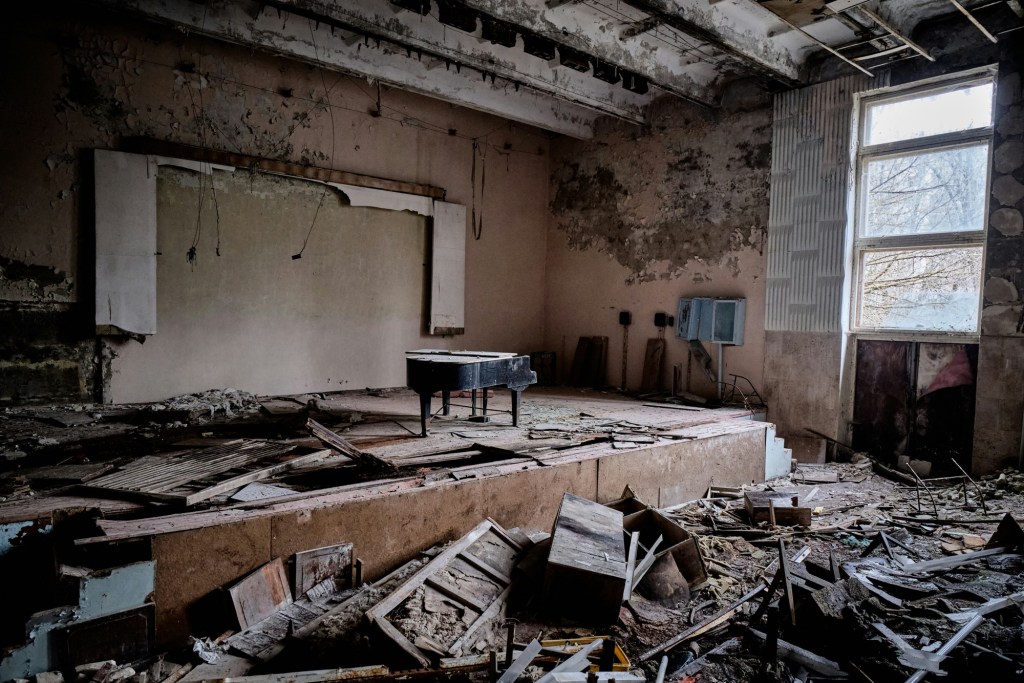
Unlike Kolmanskop, where nature gently reclaims the past, Pripyat feels like a place frozen in time—suspended in the exact moment when disaster struck. It serves as both a monument and a warning, a stark reminder of how quickly human civilization can be undone.
Hashima Island, Japan: A Concrete Ghost Town
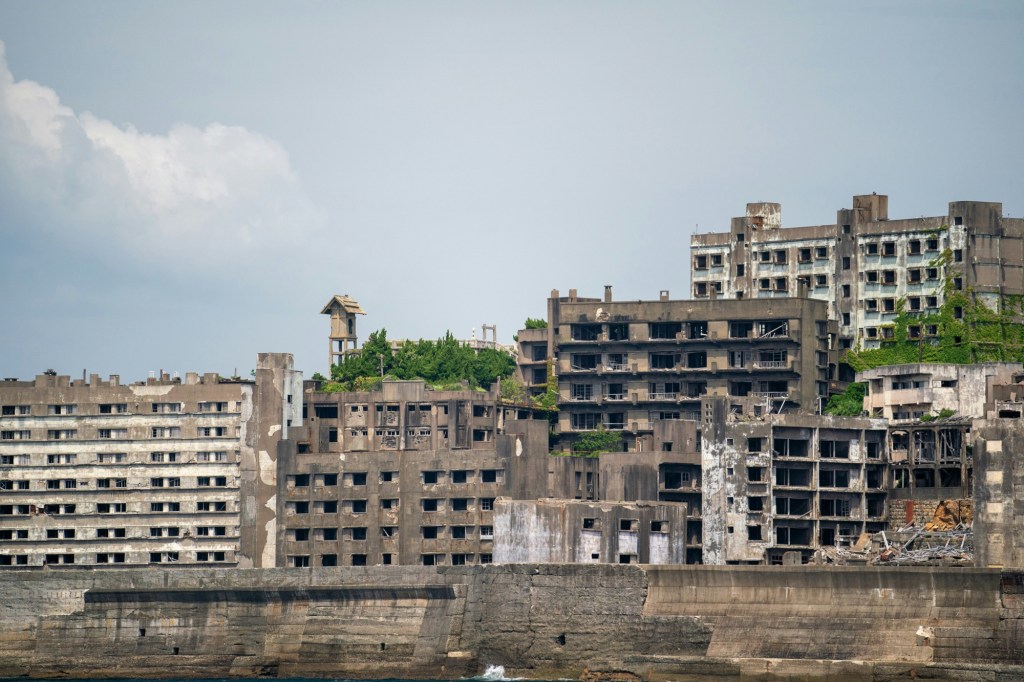
Some places disappear in plain sight, their ruins standing long after their people have left. Hashima Island, off the coast of Nagasaki, is one of them. Once a booming coal mining hub, this tiny, densely populated island housed thousands of workers in high-rise apartments. For decades, it was a symbol of Japan’s industrial success—until the coal ran out.
When we arrived by boat, we could see why it’s nicknamed “Battleship Island.” Its towering concrete structures looked more like a decaying warship than a former community. Walking through the ruins, we saw entire apartment blocks crumbling, staircases leading nowhere, and rusting industrial equipment left behind as if the workers had simply walked away one day and never returned.
Unlike Kolmanskop, where sand moves in waves over the ruins, or Pripyat, where time has stood still, Hashima is slowly being eaten by the sea. Cracks split the roads, walls are crumbling, and the elements are wearing the island down year by year. One day, it may no longer be here at all.
Should We Be Visiting These Places?
Traveling to places that no longer exist raises an important ethical question: Are we bearing witness to history, or are we turning tragedy into tourism?
Some ghost towns, like Kolmanskop, have embraced visitors as a way to preserve what’s left. Others, like Pripyat, are more controversial. Walking through a place abandoned by disaster is a humbling experience, but we must ask ourselves—are we there to learn, or to treat it as a spectacle?
The Lessons Left Behind
Visiting places that have disappeared is a humbling experience. Each of these places reminds us of one simple truth: nothing is permanent. Cities we believe will stand forever can be erased in a matter of years. Industries can rise and fall, economies can shift, and disasters—natural or man-made—can wipe entire communities off the map.
But there’s another lesson, too. These places may no longer exist in the way they once did, but as long as their stories are told, they are not truly forgotten. They live on in memory, in the remnants left behind, and in the travelers who walk their empty streets and wonder what once was.
Some places disappear slowly, others overnight. But they all remind us that history is not just found in books—it is written in the places we leave behind.
 Bucket List World Travel
Leave a comment