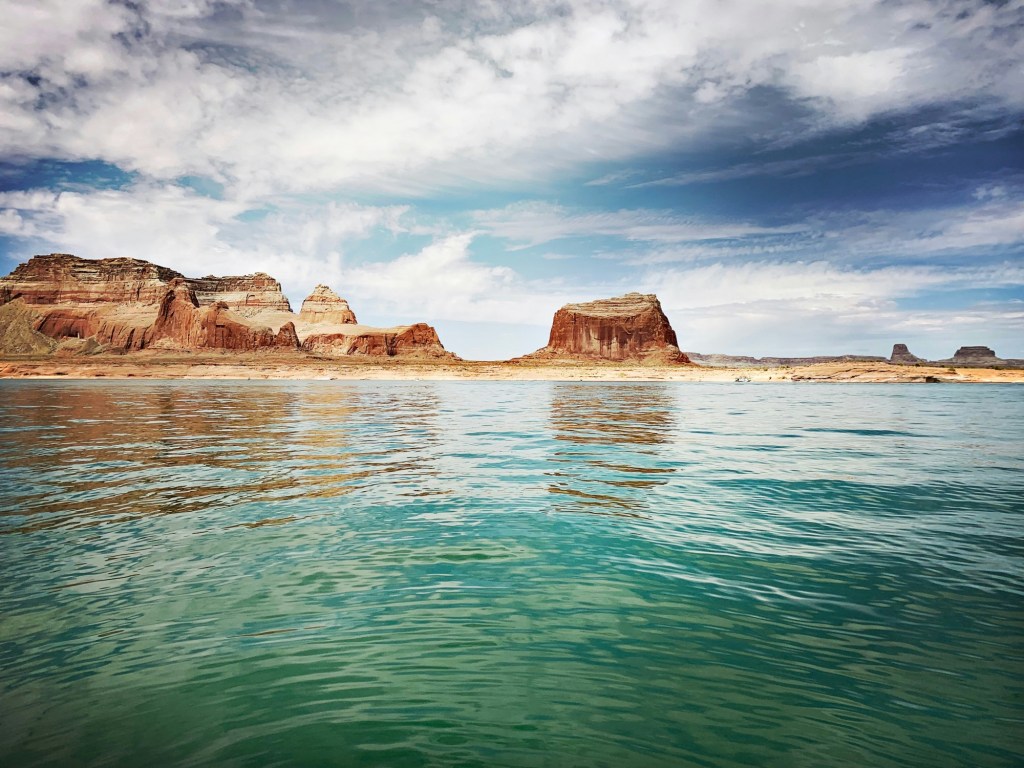
I don’t think anything truly prepares you for your first glimpse of Lake Powell. There’s a kind of magic in that moment. A surreal blend of deep blue water snaking between towering sandstone cliffs that rise like ancient guardians of time. It’s not just beautiful; it feels sacred, otherworldly. And there’s no better way to experience this desert oasis than from the seat of a kayak.
Lake Powell isn’t your average lake. It’s a man-made reservoir straddling the border of Utah and Arizona, formed by the damming of the Colorado River in the 1960s. With nearly 2,000 miles of winding shoreline, it’s longer than the entire West Coast of the United States. But what makes it truly special, beyond its size, is how it weaves through a labyrinth of canyons, slot passages, and hidden coves that you can only access by small watercraft. That’s where the magic happens. That’s why I came to kayak.
The Launch
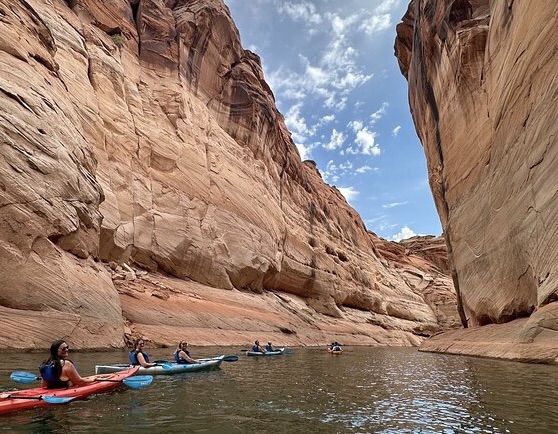
Our group launched from Antelope Point Marina early in the morning, just after the sun crept above the horizon. The water was like glass, perfectly mirroring the rust-colored cliffs above. There was a hush over everything, the kind of silence that wraps around you like a blanket. The only sounds were the rhythmic dips of paddles into water and the occasional call of a raven echoing from somewhere high above.
If you’ve never kayaked before, don’t worry, Lake Powell is a fantastic place to start. The water is calm, the scenery is distracting in the best way, and the sense of freedom is addictive. We brought our own gear, but there are outfitters nearby that rent kayaks and even offer guided tours if you’re new to the area.
We packed light: just the essentials. A dry bag with snacks, sunscreen, and plenty of water. A GoPro strapped to the front of the kayak. A wide-brimmed hat. Sunglasses. And a sense of curiosity that only grew with each paddle stroke.
Into the Canyons
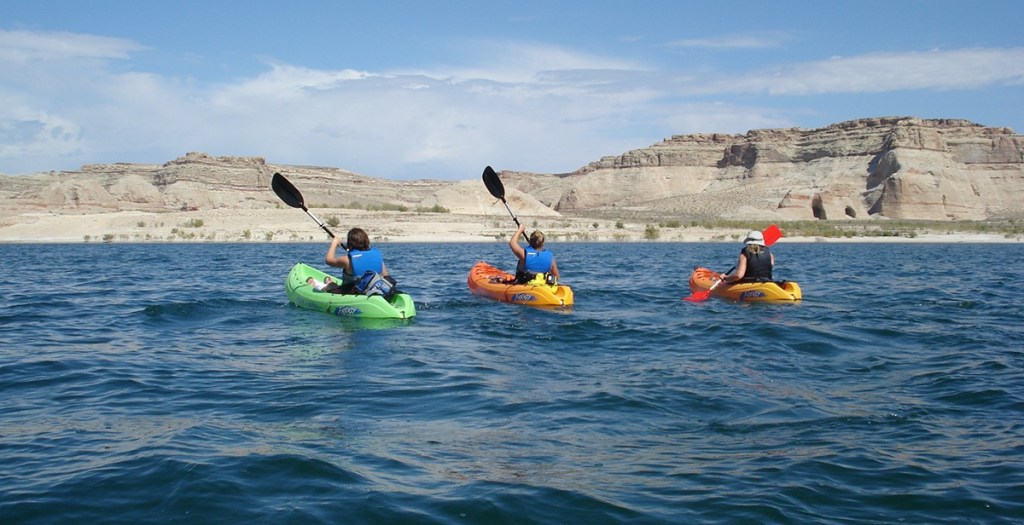
After about an hour of paddling across open water, we reached the entrance to Labyrinth Canyon. And that’s when the world changed.
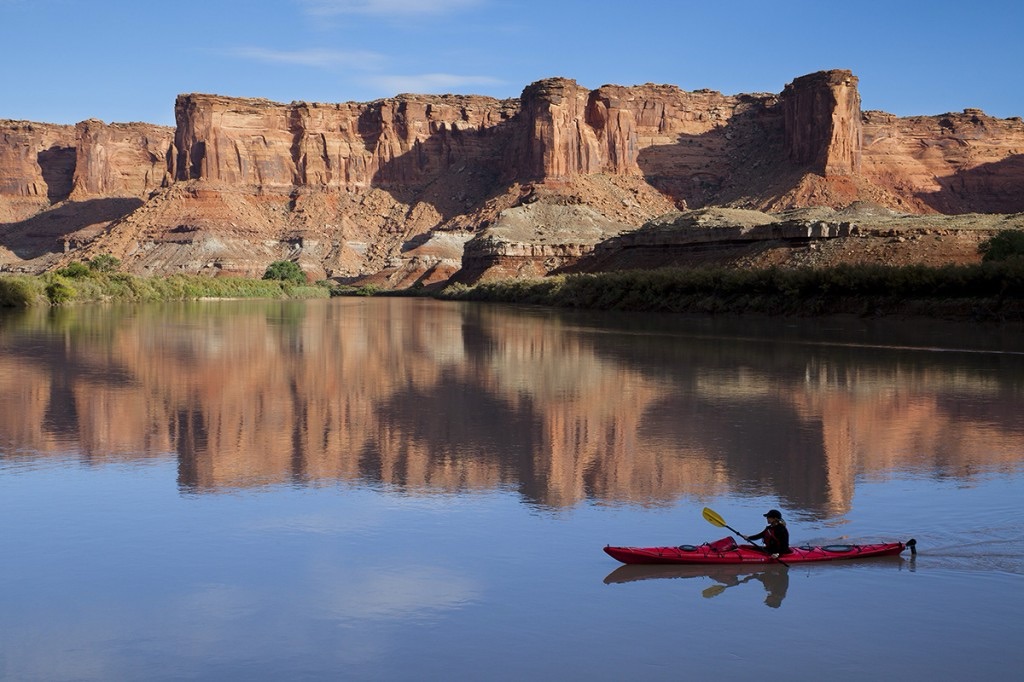
The cliffs closed in around us, rising hundreds of feet on either side. The sun barely touched the canyon floor, casting everything in a cool, golden glow. It was like paddling into the pages of a secret book written in stone. The water narrowed to the width of a two-lane road, then even tighter, until we were gliding single-file between rock walls so close we could touch both sides with our paddles.
This is the kind of kayaking that makes your heart race, not from exertion, but from awe. Every turn was a surprise. Sometimes the canyon opened up into a sun-drenched amphitheater. Other times it wound so tightly that we had to backtrack, laughing and bumping into each other as we turned around.
It’s easy to feel small here, but in the best possible way. The walls around you are etched with millions of years of geological history. Swirls of red, orange, and white layer the sandstone like a cake made by the hands of time. You start to wonder what this place looked like before the dam, before the lake. You start to feel like you’re paddling through not just space, but time.
A Place to Drift
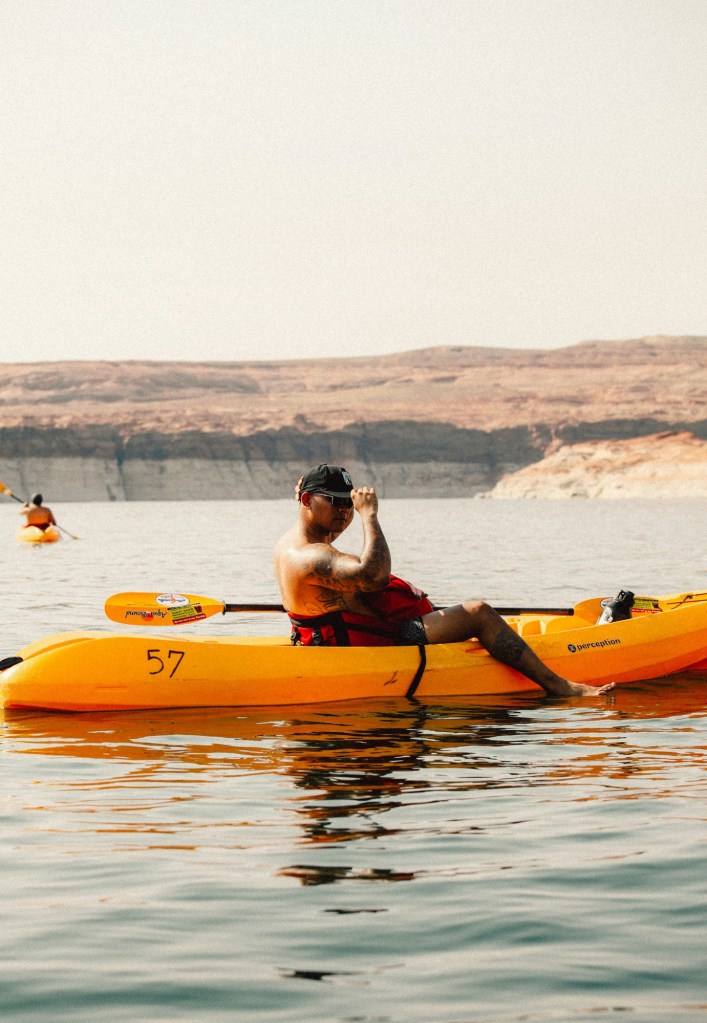
One of the best things about kayaking on Lake Powell is that there’s no rush. You don’t need to be anywhere fast. You can let the current nudge you gently along, rest your paddle across your lap, and simply exist in the moment.
That’s exactly what we did in one of the narrow arms off Labyrinth Canyon. We stopped paddling, leaned back in our kayaks, and floated. No talking, just breathing. The canyon walls absorbed every sound. It was the kind of silence you rarely find in the modern world. A silence so complete you could hear the faint whisper of water lapping against stone.
We watched a great blue heron take off from a rock shelf, its wings cutting through the air like poetry. We spotted tiny fish swimming in the shallows and lizards darting along sunlit ledges. The desert was alive in ways that surprised us.
Midday Heat and Hidden Beaches
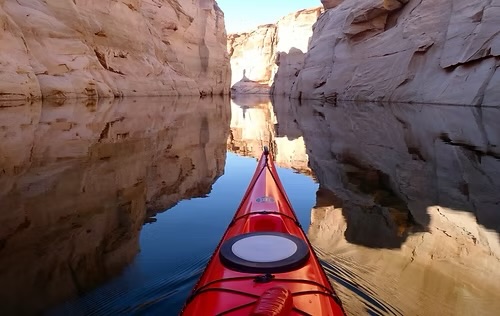
By midday, the sun was high and relentless. We’d read that summer temps here could push 100°F or more, and it didn’t take long to believe it. But the beauty of kayaking Lake Powell is that a dip in the water is never more than a paddle stroke away.
We pulled up on a hidden sliver of beach, one of hundreds you could never find on a map. The sand was warm beneath our bare feet, the water cool and inviting. We swam, picnicked under the narrow shade of an overhang, and lay on the beach like lizards basking in the sun.
That’s the rhythm of a day on Lake Powell: paddle, explore, drift, swim, repeat.
Sunset on the Water

As the day began to wind down, we paddled back toward open water. The light shifted again, casting the cliffs in rich golds and deep purples. The lake was a mirror, broken only by the ripples from our kayaks. We moved slower now, not from fatigue but from a desire to make it all last a little longer.
There’s something about watching the sun set from the middle of a canyon lake. The light lingers just a bit longer, bouncing off the red rock and hanging in the air like a farewell. It felt like the desert was saying goodbye in its own quiet way.
Tips for Your Own Lake Powell Kayaking Trip
• Timing matters: The best months for kayaking are spring (April–May) and fall (September–October) when temperatures are cooler and crowds are lighter. Summer is beautiful but scorching. Plan for early starts and plenty of shade and water.
• Permits: While kayaking itself doesn’t require a permit, you’ll need to pay an entrance fee to Glen Canyon National Recreation Area.
• Navigation: GPS and physical maps help. Cell service is spotty, and it’s surprisingly easy to get turned around in the twisting canyons.
• Overnight: Multi-day kayak camping trips are a dream here. You can camp on beaches or in canyons but just follow Leave No Trace principles.
• Hydration is key: The desert can dry you out before you realize it. Bring more water than you think you’ll need.
• Respect the land: This is a sacred place for many Native American tribes. Tread lightly and treat it with reverence.
Final Thoughts
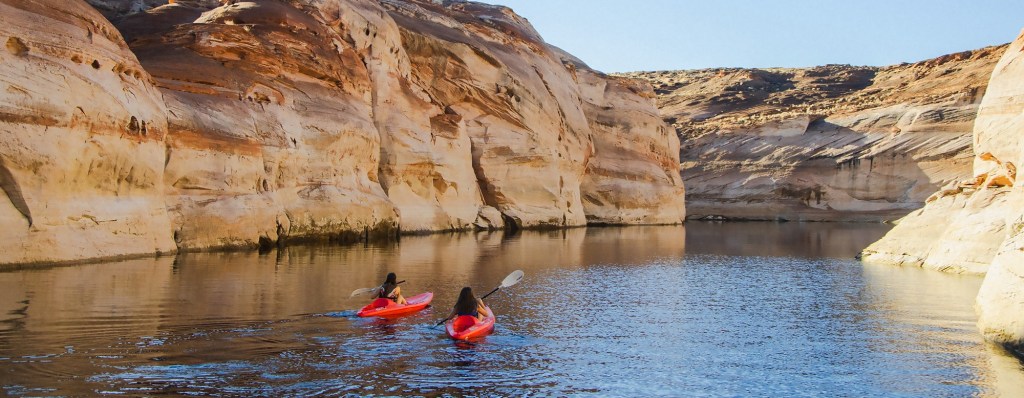
Kayaking on Lake Powell isn’t just something to check off a list. It’s a way to experience the land in its purest form. Out there, surrounded by sandstone walls and endless sky, you feel like you’ve stepped into another time. It’s not about the speed or the distance. It’s about the quiet moments, the hidden corners you can’t reach by car, and the feeling of drifting through a place that’s been shaped over millions of years. You let go a little. You slow down. And in doing that, you see more.
If you ever get the chance, grab a paddle and go. Drift down a canyon you’ve never seen. Watch the sun dance on red cliffs. Let the silence settle into your bones.
 Bucket List World Travel
Leave a comment