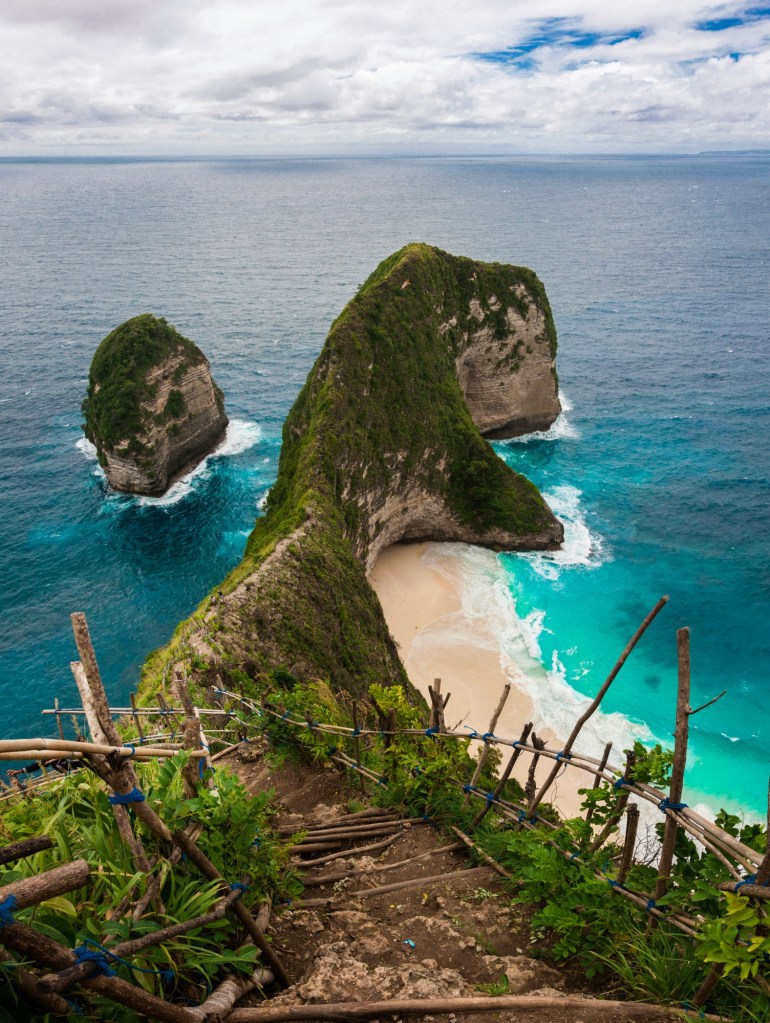
There are places in the world where nature seems to have written its own fairytale, sculpting land and sea into scenes so surreal they defy reason. On the rugged island of Nusa Penida, just off the coast of Bali, one such vision emerges: Kelingking Beach. From above, the cliffside resembles the shape of a giant T-Rex resting in the ocean, its emerald spine stretching into endless blue. Yet no photograph, no postcard, can capture the vertigo of standing at its edge, where the earth drops dramatically to a hidden cove of white sand and crashing surf.
The Arrival
Reaching Kelingking is no simple stroll. The road snakes across the island, narrow and uneven, flanked by coconut groves and villages that move at their own pace. The journey is a reminder that treasures worth finding often lie beyond comfort. As travelers approach the cliffside, the air shifts. The hum of motorbikes fades, and the roar of the ocean begins to rise from unseen depths.
Then the view bursts into existence—sudden, commanding, impossible to ignore. The ridge unfurls into the sea, and the horizon becomes an unbroken canvas of blues. For a moment, silence often follows. Awe has a way of quieting even the most restless souls.
The Cliff’s Embrace

From the viewpoint, Kelingking feels like both a masterpiece and a mystery. The cliffs, draped in vivid green, fall sharply into the turquoise water below. The sand glows white, untouched, framed by limestone walls that rise like guardians around the cove. Time slows here, as if the world is pausing to admire its own creation.
Winds sweep across the ridge, carrying with them the scent of salt and the faint cry of seabirds. Visitors linger along bamboo railings, eyes wide, cameras raised, but every image feels like a fragment of what the heart registers. The truth of Kelingking lies in its enormity, its untamed grace, and the way it dwarfs everything human beside it.
The Descent

The hidden beach below tempts the daring. Reaching it demands resolve, for the descent is less a path than a challenge. Wooden steps lead the way at first, but soon they give way to jagged rock and rope railings, the trail clinging precariously to the cliffside. Each movement requires attention, each step a negotiation between fear and determination.
The climb is long, steep, and unrelenting. The sun presses heavily on shoulders, sweat gathers at brows, and legs tremble from the strain. Yet with each downward stretch, the sand grows closer, the roar of waves louder, until perseverance finally meets reward.
The Shoreline
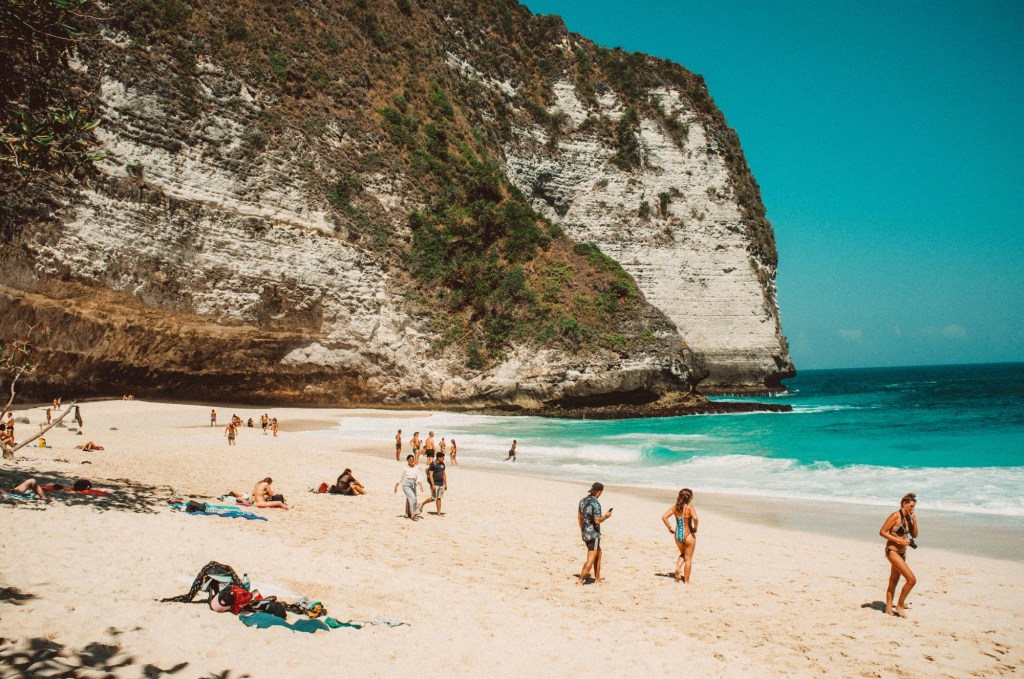
At the bottom lies a world almost primeval in its beauty. The cliffs, towering overhead, feel impossibly tall from below—massive walls of limestone that seem carved by giants. Shadows stretch across the sand as clouds drift lazily above, and the sea hurls itself against the shore with a power that shakes the air.
The sand is soft and blindingly white, untouched save for the fleeting traces of those who make the journey down. The water, though dazzling in its turquoise hues, is no gentle lagoon. Strong currents and surging waves remind all who stand here that nature is not only beautiful but commanding. Few dare to swim far, and those who do quickly learn the strength of the Indian Ocean’s embrace.
Yet the danger does not diminish the magic—it heightens it. The beach feels secret, sacred even, a place where human presence is temporary and the land remains sovereign.
The Play of Light
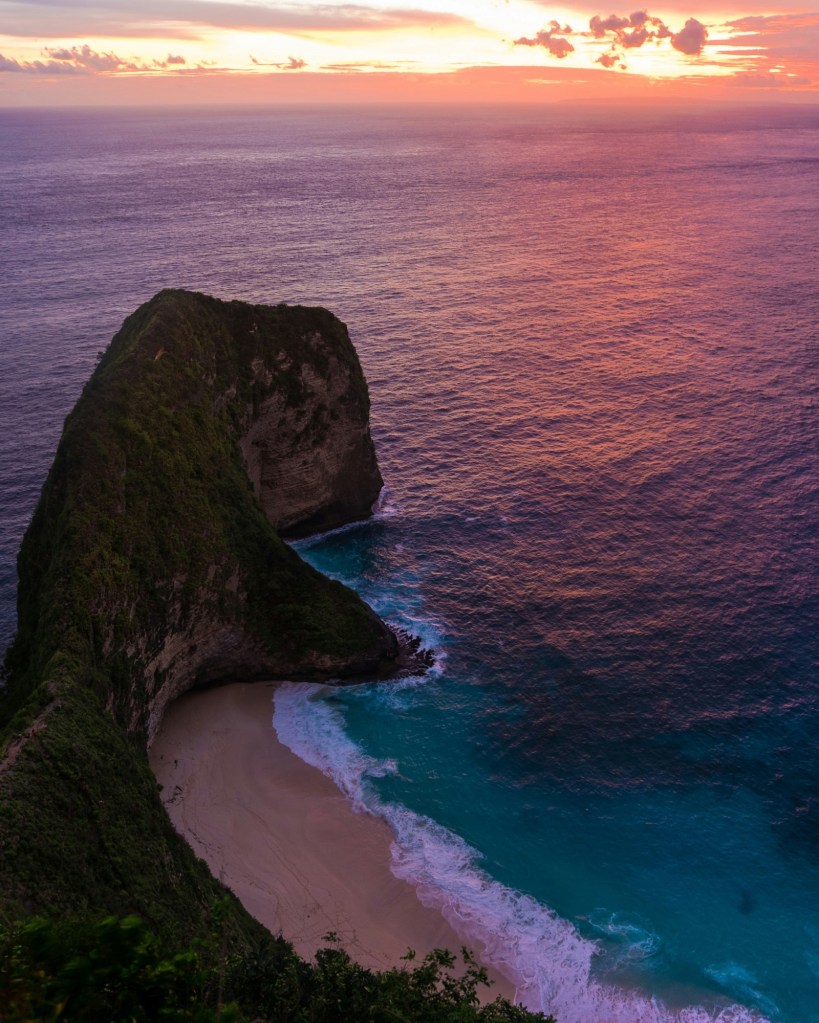
As the day unfolds, Kelingking transforms with the light. Morning softens the cliffs in pale gold, while midday sharpens every edge into striking relief. By afternoon, the waters blaze a deeper blue, and the cliffs cast long, sweeping shadows across the sand. Sunset brings its own drama, as the sky burns with orange and crimson while the waves glimmer with fading fire.
Each hour reveals a new facet of the landscape, as though Kelingking itself is alive, shifting moods with the sun.
A Place Beyond Time
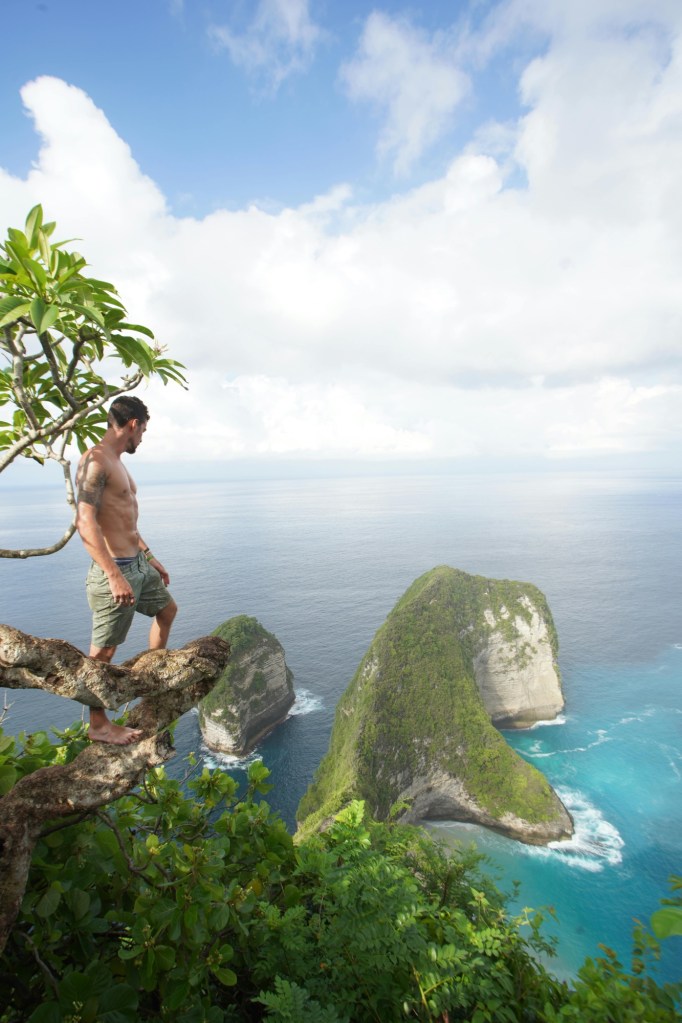
What sets Kelingking apart is not just its beauty but its atmosphere of otherworldliness. It feels less like a beach and more like a scene lifted from a dream—unreachable, improbable, yet undeniably real. It is both stage and story, where cliffs play the role of towering sentinels and the ocean performs with relentless force.
Travelers who come often linger, reluctant to leave, for the moment demands more than a glance. It asks for surrender—to the wind, the sound of surf, and the immensity of it all.
The Return
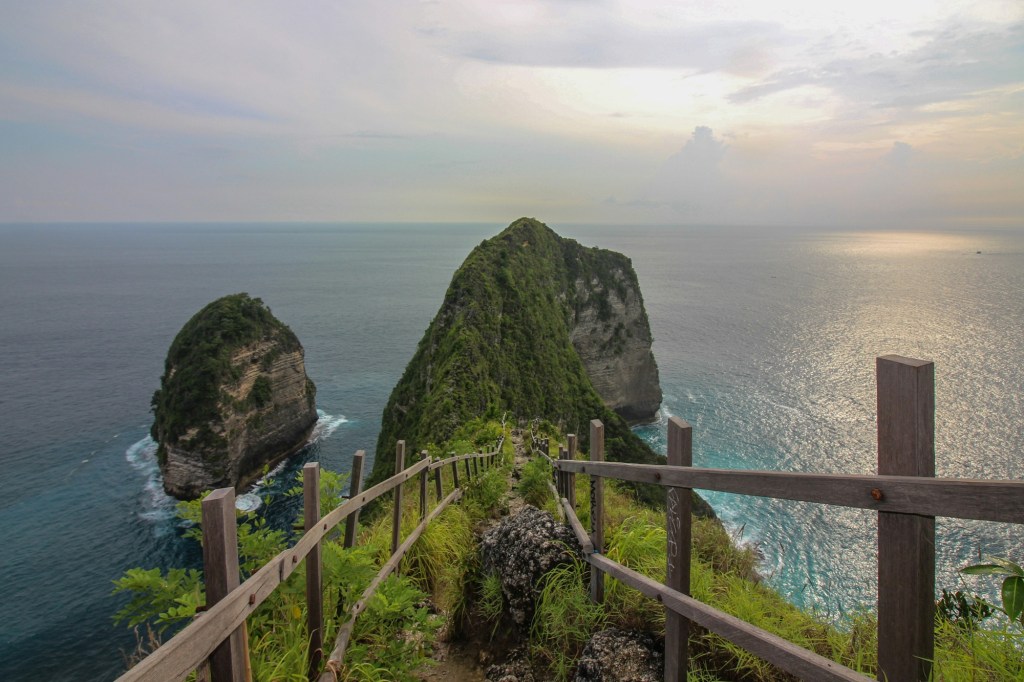
The climb back up is grueling. Muscles ache, lungs burn, and the cliff seems to stretch endlessly toward the sky. Yet the reward of the ascent is a view that grows grander with each upward glance. The ocean sprawls out once more, the ridge unfurls again, and the perspective shifts from intimacy to immensity. By the time the top is reached, exhaustion melts into exhilaration.
Above, the breeze cools the skin, and the cliffs seem to whisper a reminder: beauty is rarely effortless, but it is always worth the struggle.
The Legacy of Kelingking

Kelingking Beach is not simply a destination; it is an experience etched into memory. It is the gasp at first sight, the trembling descent, the thunder of waves in a hidden cove, the ache of the return climb, and the lingering awe long after departure.
It embodies Bali’s paradox: serene yet untamed, welcoming yet humbling, fragile yet enduring. Kelingking is proof that even in a world mapped and photographed, wonder still exists, waiting to be earned step by step.
For those who seek not just to see but to feel, not just to photograph but to remember, Kelingking Beach is more than a place. It is a reminder of the scale of nature and the smallness of humanity before it.
 Bucket List World Travel
Leave a comment