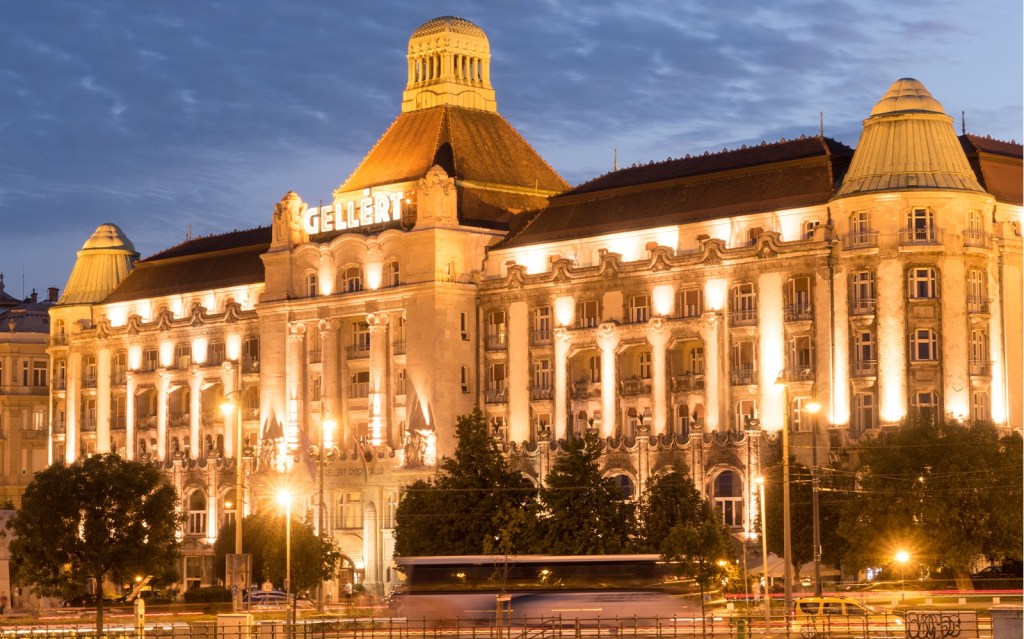
The Danube whispers as it glides past the Liberty Bridge, its currents carrying centuries of stories through the heart of Budapest. Just beyond the emerald-green span rises an Art Nouveau masterpiece—a palace of mosaics, stained glass, and swirling steam. This is Gellért Thermal Baths, Hungary’s most iconic spa, where water and history entwine to create something almost otherworldly.
A Palace Built for Water
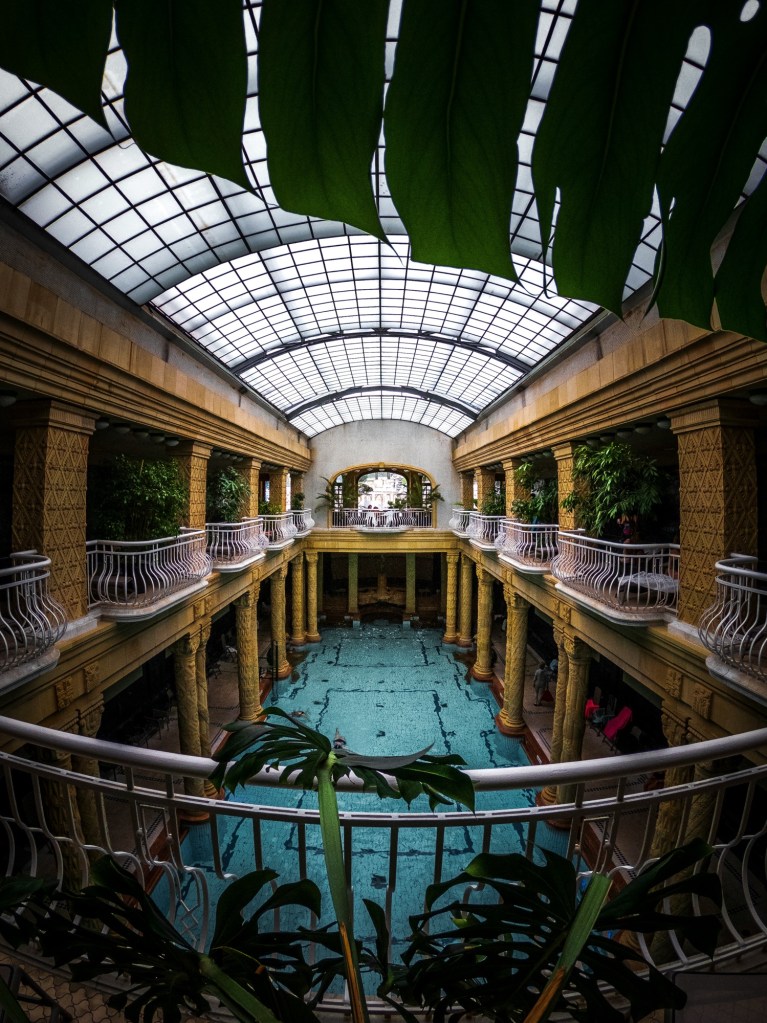
Step inside, and you are no longer in the 21st century. Light streams through stained-glass skylights, dancing across turquoise tiles and carved stone columns. The scent of minerals lingers in the air, earthy and ancient, as though the walls themselves exhale the past.
The baths opened in 1918, during the twilight of the Austro-Hungarian Empire, yet the hot springs here have been flowing for centuries. Roman settlers once sought their warmth, and later the Ottomans embraced them during their occupation in the 16th and 17th centuries. What began as a gift from the earth became a ritual of renewal, passed from culture to culture until it found permanence in the grand Art Nouveau structure we see today.
To soak in Gellért is to dip into layers of history, every ripple carrying the weight of empires and the hush of forgotten conversations.
The Symphony of Water
The main indoor pool unfurls like a jewel box, flanked by colonnades that echo with every splash. Above, balconies curve like the arches of a theater, as though the pool itself is the stage and bathers are both audience and actors in a slow, graceful performance.
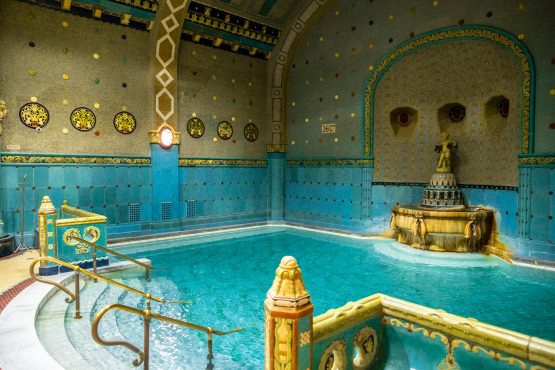
Venture deeper, and the atmosphere shifts. Steam thickens. The air hums with the quiet rhythm of geothermal springs that surge from deep beneath Gellért Hill. Each thermal pool glows with its own hue and heat—one like molten sapphire, another emerald shadowed in mist.
Some pools soothe at a gentle 36°C, while others rise to a near feverish 40°C, sending a calming wave through weary muscles. Locals move unhurriedly from one to the other, their ritual as practiced as a dance. Here, time does not dictate the rhythm—you let the water decide.
Rituals of Renewal
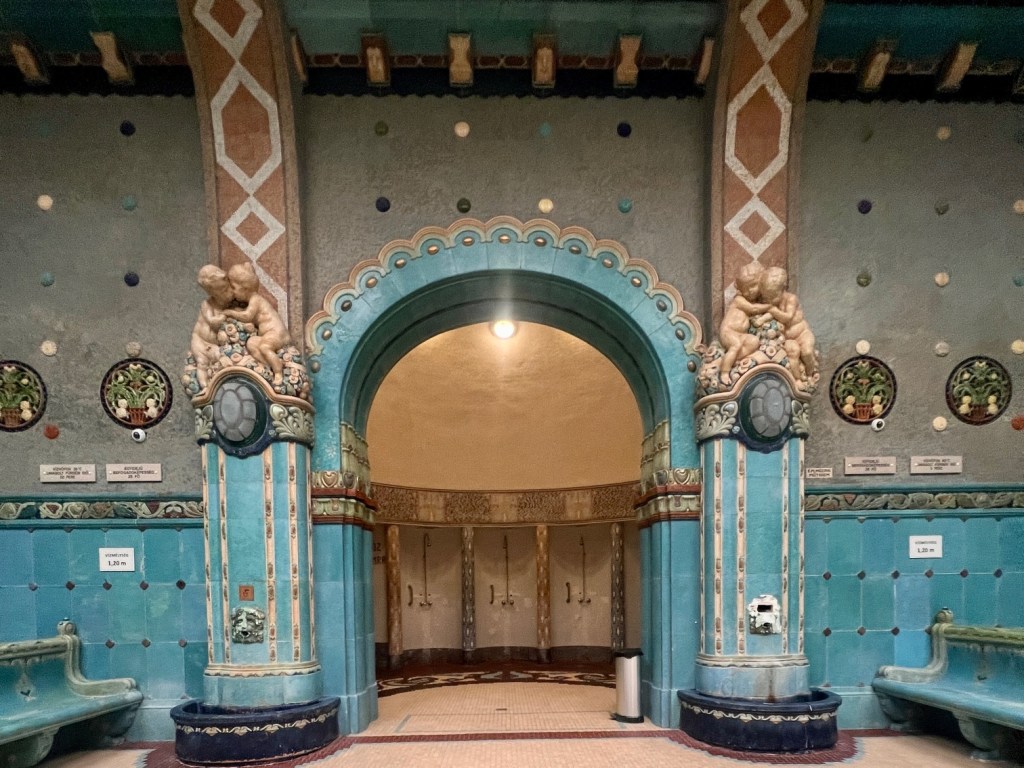
To visit Gellért is to surrender. The baths are not simply for bathing; they are sanctuaries of healing. For centuries, Hungarians have trusted these mineral-rich waters to treat ailments—everything from arthritis to fatigue.
Slip into the medicinal pools, said to be infused with calcium, magnesium, and hydrogen carbonate. Let the currents cradle you until the world beyond the tiled walls fades away. Then, step into the sauna chambers, where cedar-scented heat seeps into the skin before you plunge into a bracing cold pool that shocks every sense alive.
And if indulgence calls, the adjoining spa offers massages, mud treatments, and wellness therapies—a continuation of Budapest’s long-standing identity as the “City of Spas.”
The Outdoor Oasis

Step into the sunlight, and another world reveals itself. The outdoor wave pool—built in 1927 as the first of its kind in Europe—still stirs with playful energy. With the push of a button, the tranquil surface erupts into rolling waves, laughter echoing off the ornate façade of the Gellért Hotel above.
Here, the juxtaposition is striking: one moment, serenity in a marble chamber; the next, joy in the open air. Towering over the courtyard, the cream-and-gold architecture frames swimmers like figures in a painting, making even the most casual dip feel cinematic.
In winter, mist rises from the outdoor pools, a soft veil of steam against frosty air. Bathers linger in defiance of the cold, their faces glowing as the Danube glitters beyond the gates.
A Living Legend
Though Budapest is a city of many baths—Széchenyi, with its sprawling yellow courtyards, and Rudas, with its Ottoman dome—Gellért holds a different kind of allure. It is elegance incarnate, where architecture and atmosphere merge to form a dream.
Every corner is cinematic: the slow curl of steam rising to stained glass, the reflection of turquoise tiles rippling in the water, the way golden light filters through high windows at dusk. To be here is to feel part of a story much older than yourself, a story still unfolding in every drop of spring water that finds its way to the surface.
Cultural Heartbeat of Budapest
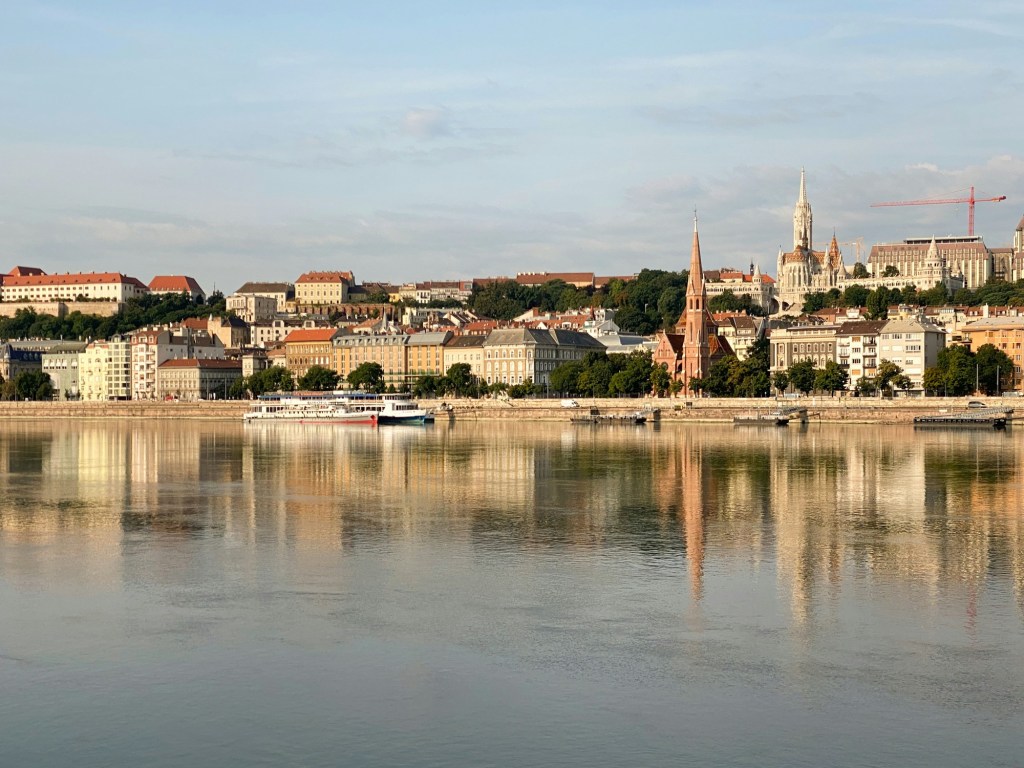
Hungary’s bath culture is more than recreation—it is identity. The Romans built the first thermal baths along the Danube, the Ottomans expanded the tradition, and the Austro-Hungarians elevated it into an art form. Today, the baths are places where locals and travelers mingle, where conversations drift between languages, and where rituals of healing meet the rhythm of daily life.
At Gellért, this culture is alive in every detail. It is in the elderly man playing chess on the poolside, the group of friends sharing stories in the hot pools, the traveler pausing in awe at the grandeur of the atrium. In Hungary, bathing is not indulgence—it is belonging.
Before You Go
Location: At the foot of Gellért Hill, next to Liberty Bridge, Buda side of the Danube.
Hours: Typically open daily, though sections may close for cleaning—check before you go.
Best Time to Visit: Early morning for serenity, or late afternoon when the stained glass glows with golden light.
What to Bring: Swimwear, flip-flops, a towel (rentals are available), and a bathing cap if you plan to swim in the main pool.
Tip: Stay nearby at the historic Hotel Gellért (currently under renovation), or cross Liberty Bridge for stylish boutique stays in Pest.
The Final Soak

As the day wanes and the pools quiet, you lean back against warm stone, listening to the trickle of water echo under domed ceilings. The lights dim, and the baths seem to hum with something eternal.
In that moment, you realize Gellért is more than a bath. It’s a story carved in tile and steam—a reminder that beauty, like water, has a way of flowing through time, carrying us with it, if only for a little while.
 Bucket List World Travel
Leave a comment