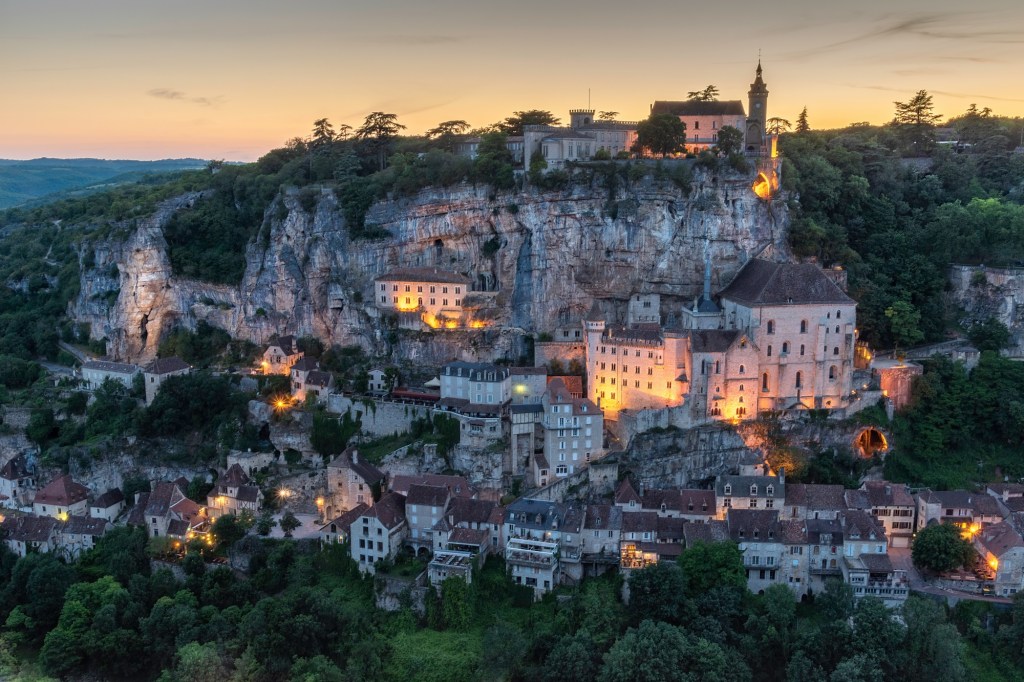
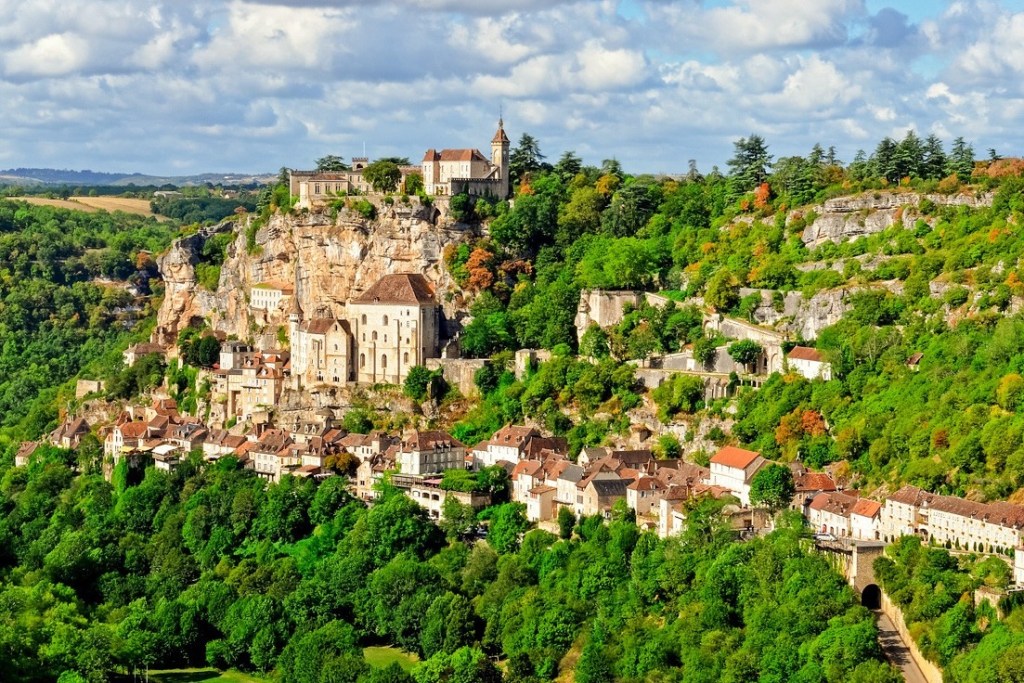
Perched high above the Alzou Canyon, clinging almost impossibly to the sheer limestone cliffs, Château de Rocamadour feels less like a fortress and more like a dream suspended between heaven and earth. The first glimpse of the village is cinematic—stone houses stacked like steps up the rock face, crowned by chapels, monasteries, and finally the château itself. Bathed in golden light at dusk, Rocamadour looks as though it has been carved directly from the cliffside by centuries of devotion.
A Village Built on Faith and Stone
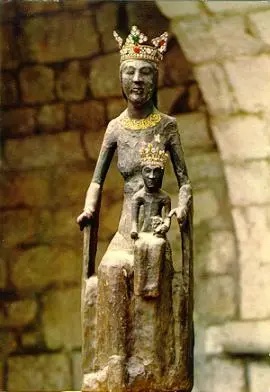
Rocamadour is not just a château; it is a sanctuary. For over a thousand years, pilgrims have climbed its 216 steps of the Grand Escalier on their knees, seeking blessings from the Black Madonna in the Chapelle Notre-Dame. As the bells ring across the valley, the air carries a sense of reverence, as though the stones themselves remember every prayer whispered here.

The Sanctuaries of Rocamadour—a cluster of chapels, basilicas, and crypts—are layered into the cliffs like chapters of an illuminated manuscript. Above them all stands the château, watching over the valley, its ramparts offering sweeping views of the Dordogne landscape: a patchwork of green fields, winding rivers, and sleepy villages that seem untouched by time.
The Château Experience
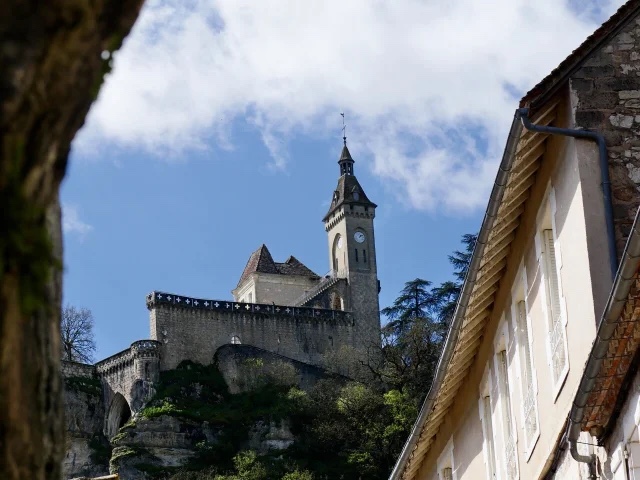
Visiting the château is like stepping into a medieval legend. Though once a defensive stronghold, today it is a portal to panoramic vistas. Walking the ramparts, you can feel the sheer drop beneath your feet, and the horizon stretches endlessly—a painter’s dream of rolling hills and soft skies. The light at sunrise and sunset transforms the cliffs into glowing gold, making it one of the most magical viewpoints in all of France.

Inside, exhibitions tell stories of knights, pilgrims, and the fortified village’s enduring faith. But the real wonder is not in artifacts—it’s in the way the château seems to merge seamlessly with the cliff, as if nature itself decided to build a fortress.
Beyond the Walls: The Dordogne Valley
Rocamadour may steal the spotlight, but its surroundings deserve equal applause. The Dordogne is a land of hidden rivers, prehistoric caves, and storybook villages. A short drive away lies Padirac Cave, where you can drift by boat along an underground river lit by lantern glow, the vaulted chambers above you soaring like a cathedral of stone.
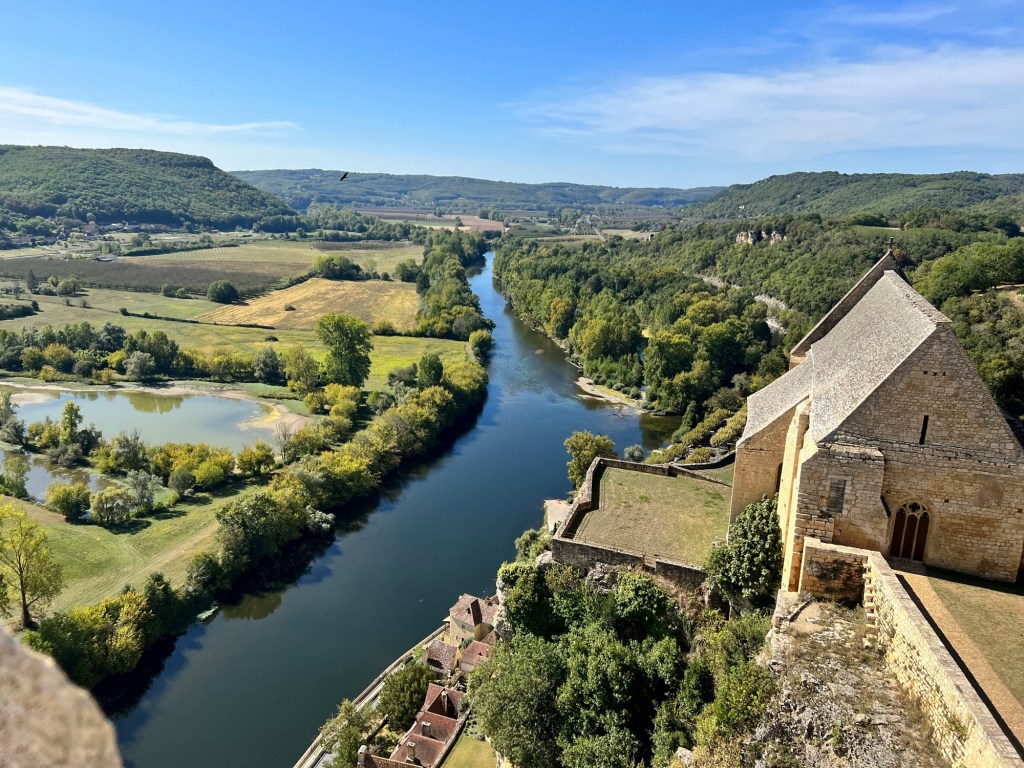
To the west, the Dordogne River meanders past medieval towns like Sarlat-la-Canéda, where cobblestone lanes are perfumed with truffles and foie gras at the market. Vineyards roll along the hillsides, producing wines that taste of the sun and soil of this timeless land.
A Journey Through Time
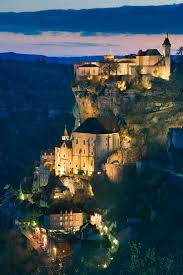
Evenings in Rocamadour carry a hushed beauty. As twilight deepens, the village lights flicker to life, cascading down the cliff like stars reflected on stone. Dining at a terrace overlooking the valley, you taste the flavors of the region—duck confit, walnut cake, Cahors wine—while the illuminated château seems to float in the darkness, a beacon of history and faith.

Here, past and present blur. The clink of glasses blends with the echo of pilgrim songs. The cliffs whisper legends, and the river below carries them on.
Why Rocamadour Captivates
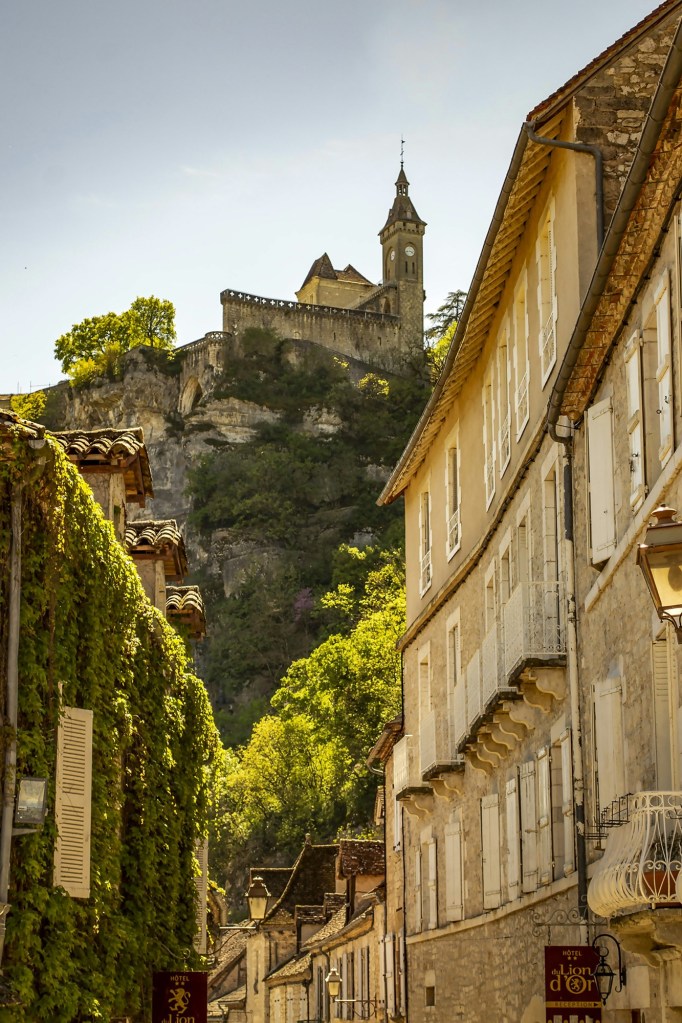
To visit Château de Rocamadour is to step into a living story—one of faith, endurance, and beauty sculpted by time. It is a place that awakens wonder not only for its architecture, but for the sense of connection it offers: to the land, to history, and to the human spirit reaching skyward.
When you leave, the cliffs remain etched in memory like a scene from a film—timeless, dramatic, and unforgettable
 Bucket List World Travel
Leave a comment