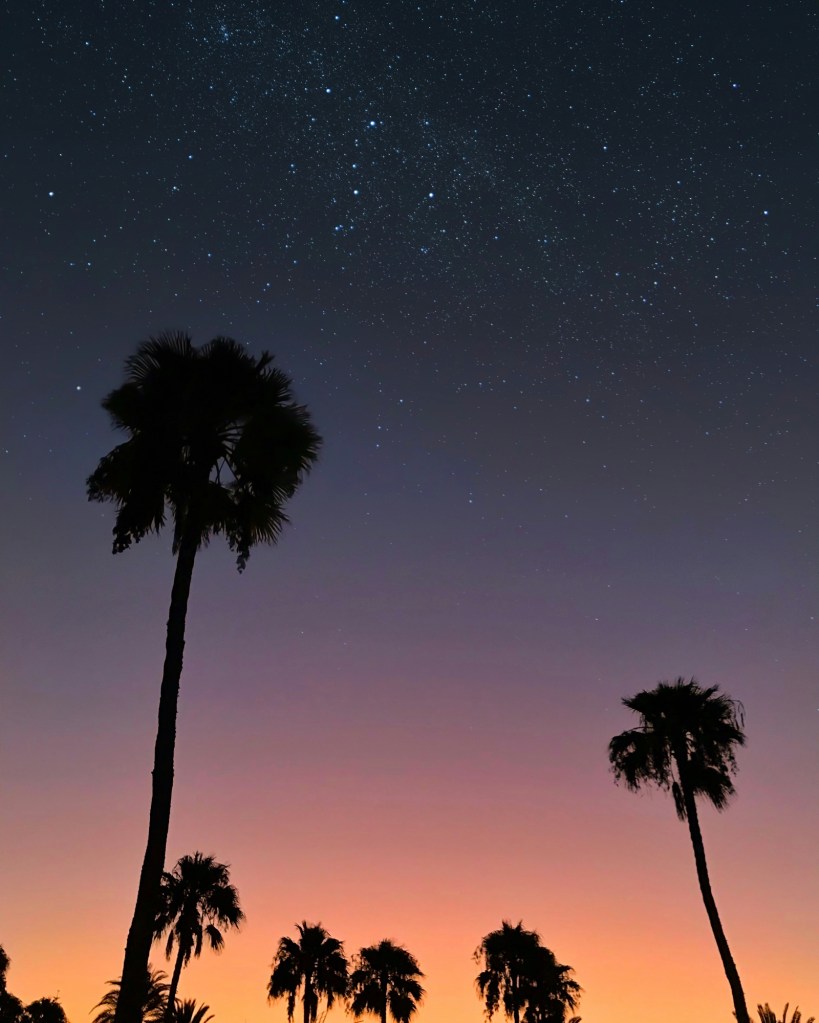
Florida may be best known for its sunshine, but when the last rays slip beyond the horizon, the state reveals a different kind of magic—one that has nothing to do with neon lights or fireworks shows. Beneath the velvet sweep of night, far from the buzzing cities and boardwalks, Florida’s certified Dark Sky Parks invite travelers into a realm of infinite wonder. Here, the Milky Way shimmers in silver ribbons, shooting stars carve fleeting wishes across the sky, and silence deepens into something sacred.
If you thought Florida was only about beaches and theme parks, prepare to be astonished. This is the side of the Sunshine State where darkness becomes a gift, and the cosmos takes center stage.
Kissimmee Prairie Preserve – The Galaxy in the Grasslands
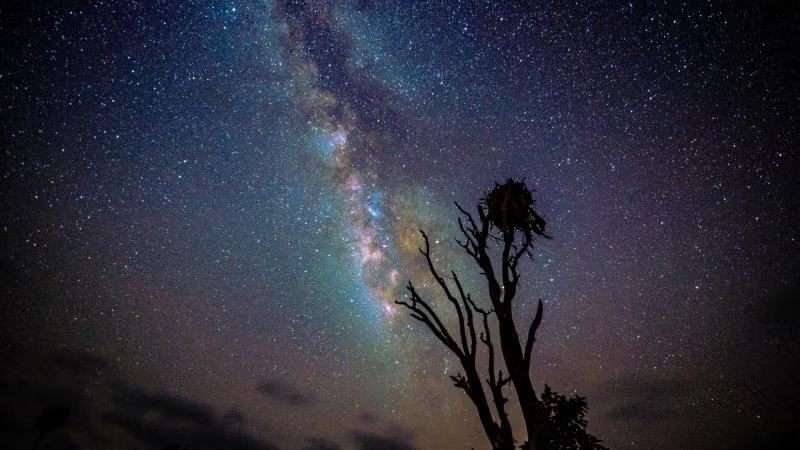
Tucked away in central Florida’s wild heart lies Kissimmee Prairie Preserve State Park, a sprawling 54,000-acre grassland where the night feels almost prehistoric. With no light pollution for miles, this park is one of the rare places east of the Mississippi where the Milky Way can be seen in all its dazzling clarity.
As twilight fades, the prairie transforms. Crickets sing their endless chorus, the air cools, and the sky ignites with billions of stars. Amateur astronomers gather with telescopes, but you don’t need fancy gear—just lying on your back in the grass is enough to feel small beneath the immensity of the universe.
On special nights, the park opens its astronomy pad for stargazers, creating a communal celebration of the heavens. Imagine spotting Saturn’s rings through a telescope, then turning your head to catch a shooting star streaking across the black canvas.
And in the early morning hours, mist rolls across the prairie, wrapping it in an ethereal hush, as though the night itself was a dream you almost didn’t believe.
Big Cypress National Preserve – Stars Over the Swamp
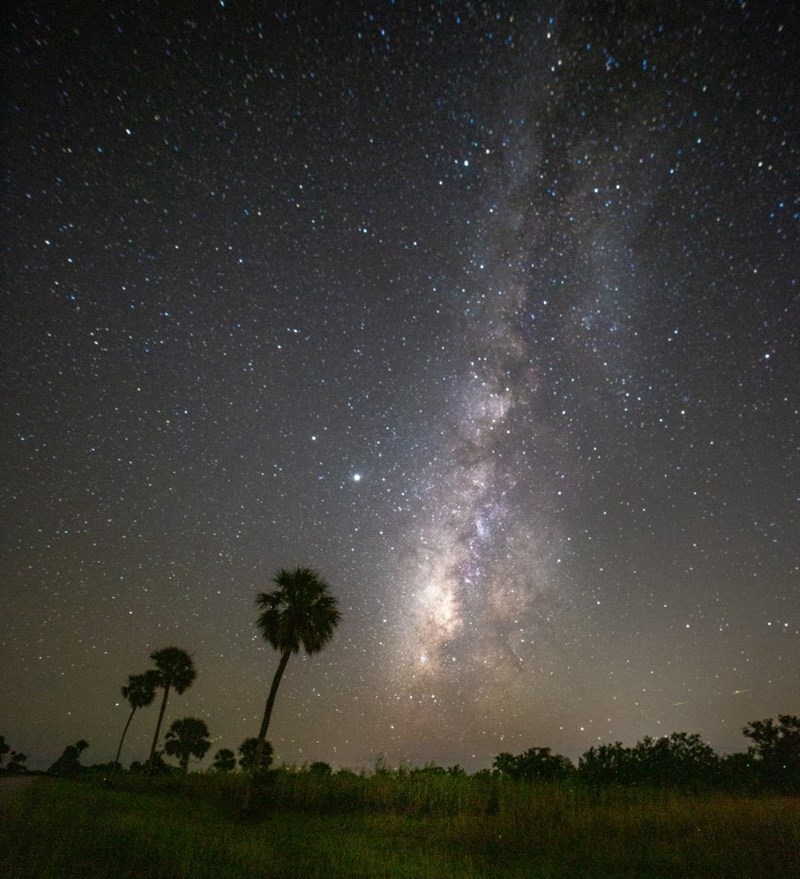
To the south, deep in the subtropical wilderness of the Everglades, lies Big Cypress National Preserve, another sanctuary of darkness. Covering over 700,000 acres of swamp, cypress forests, and waterways, this preserve has earned its place as one of Florida’s premier stargazing destinations.
At first glance, it might seem like an odd pairing: stars and swamps. But once the sun sets, Big Cypress becomes a cathedral of stillness. The night sky reflects in the glassy waters of the wetlands, creating a mirrored galaxy beneath your feet. Owls call in the distance, and somewhere in the darkness, an alligator splashes—reminders that this is still Florida’s wild frontier.

During the winter dry season, rangers often host astronomy programs, teaching visitors about constellations and cosmic events. The lack of humidity and crisp night air create crystal-clear views of planets, nebulae, and star clusters. It’s not just stargazing—it’s immersion in an ancient landscape where nature and cosmos blur together.
St. George Island – Stars Along the Forgotten Coast
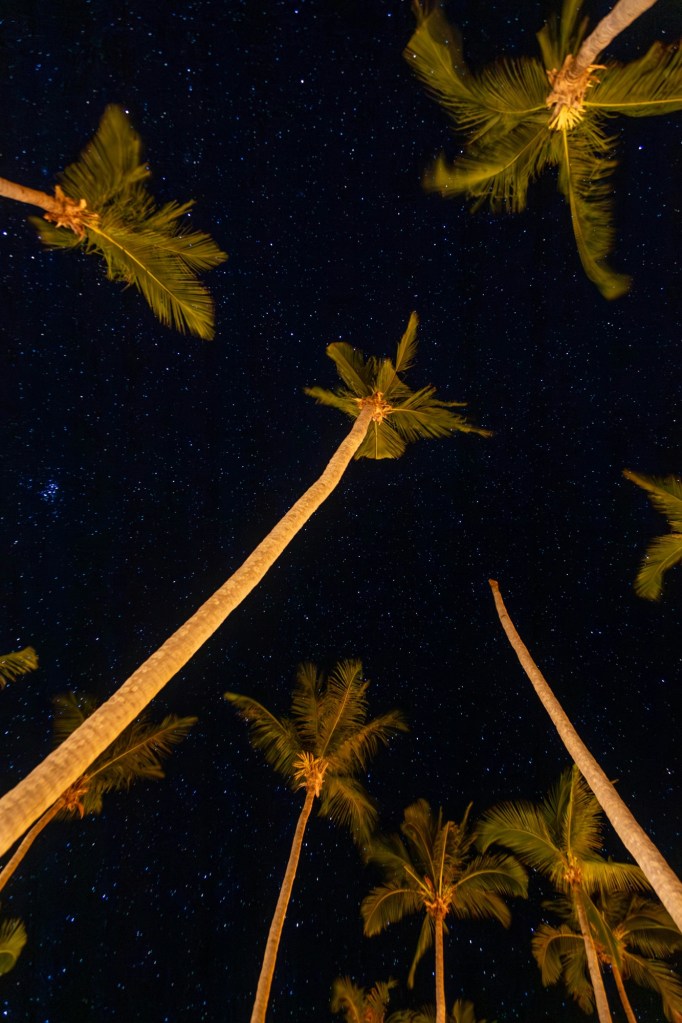
On Florida’s Panhandle, the Forgotten Coast lives up to its name. Far from the neon glow of tourist towns, St. George Island State Park has been recognized as one of the state’s best places for dark skies. By day, it’s all sugar-sand beaches and turquoise waters, but when the sun sinks, the heavens awaken.
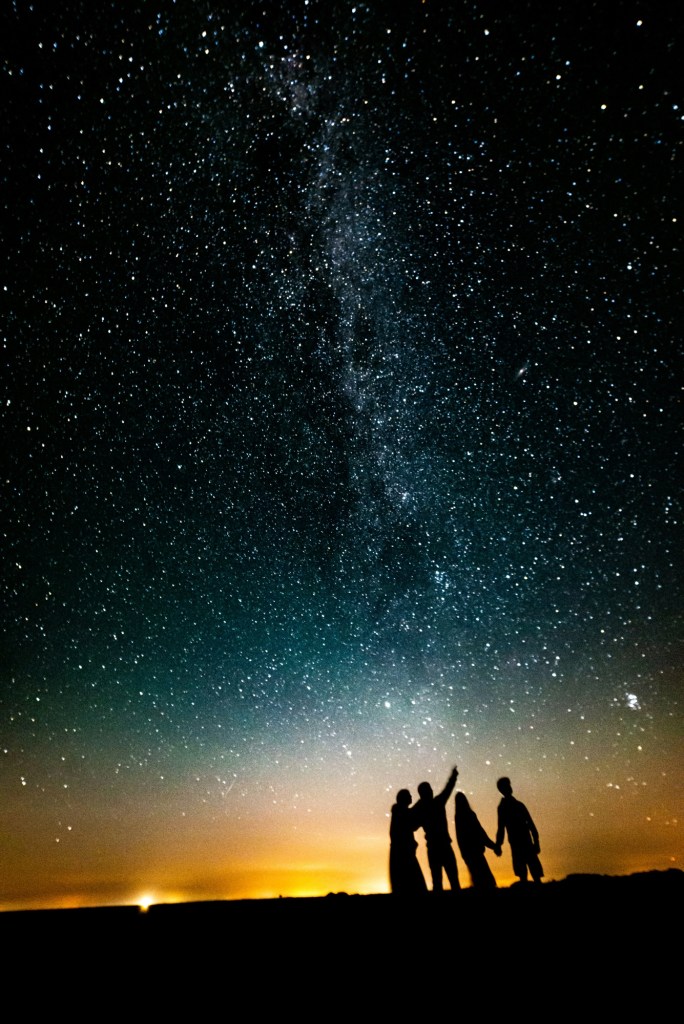
Here, the night belongs to stargazers. Families spread blankets on the dunes, couples walk hand in hand beneath a canopy of constellations, and photographers capture time-lapse shots of the Milky Way arching over the Gulf of Mexico. The rhythmic crash of waves makes it easy to forget that you’re still in Florida—it feels more like a remote island in the Caribbean, where the stars have never dimmed.
Come during a meteor shower—like the Perseids in August or the Geminids in December—and you’ll witness a celestial performance unlike anywhere else in the state.
Why Florida’s Dark Skies Matter
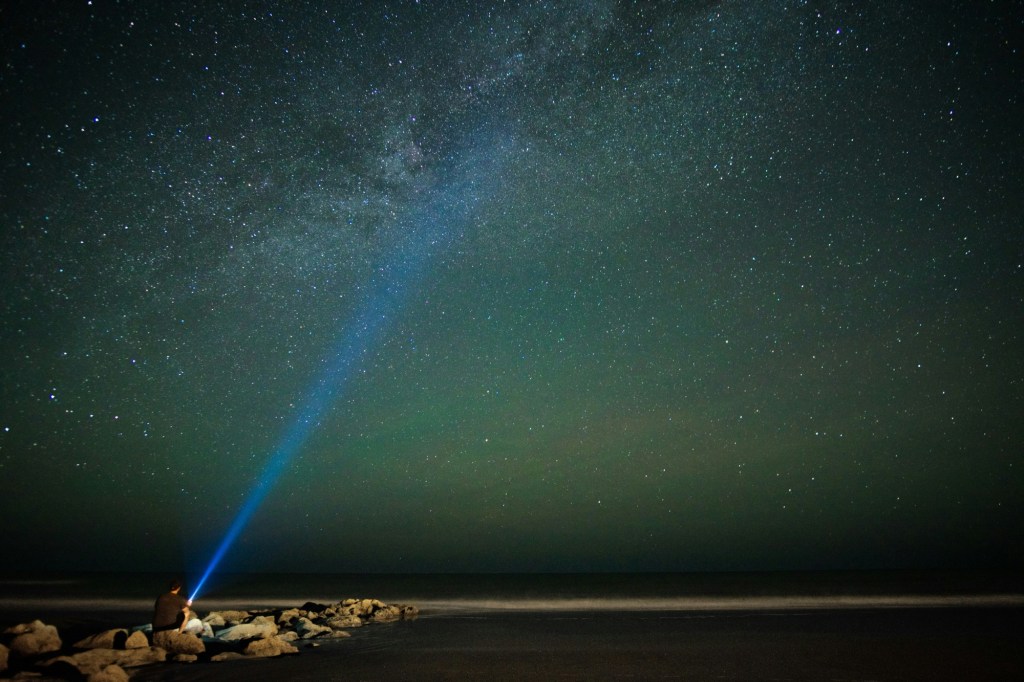
In a world increasingly drowned in artificial light, Florida’s Dark Sky Parks are rare sanctuaries. They remind us that the night sky was once humanity’s oldest map, calendar, and storybook. To stand beneath such brilliance is to reconnect with something timeless—something bigger than ourselves.
These parks are not just about beauty; they’re about preservation. Light pollution doesn’t only steal the stars from our eyes—it disrupts ecosystems, confuses migrating birds, and alters nocturnal wildlife behavior. By protecting dark skies, Florida safeguards not only our wonder, but also the natural rhythms of its wild landscapes.
Tips for Stargazing in Florida’s Dark Sky Parks
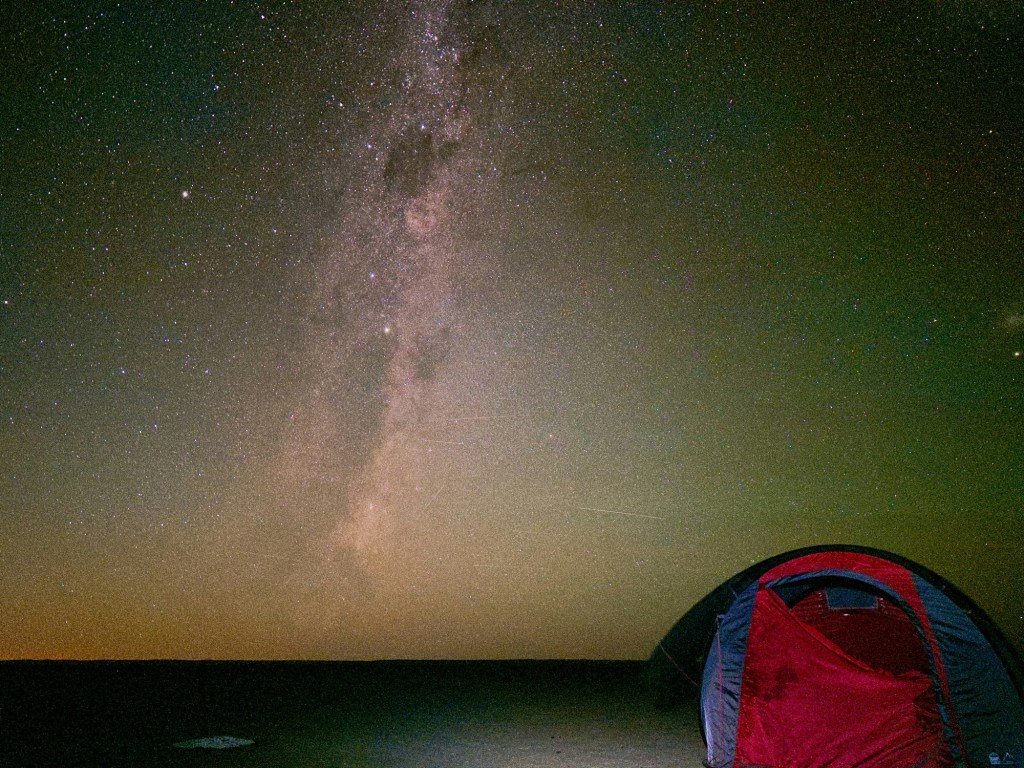
Time it right – Visit during a new moon for the darkest skies, or plan around meteor showers for a dazzling display.
• Pack essentials – Bring red-filtered flashlights (to preserve night vision), bug spray, and layers—it can get chilly even in Florida.
• Capture the cosmos – If you’re into photography, use a tripod and long exposures to reveal colors and clusters invisible to the naked eye.
• Stay overnight – Many of these parks offer camping. There’s nothing quite like waking up to the soft glow of dawn after a night beneath a billion stars.
Final Thought

The Sunshine State may sparkle by day, but it’s at night that Florida reveals its most unexpected treasure—the sky itself. Beneath the vastness of the Milky Way, surrounded by the wild hum of swamps and prairies, you feel what travelers often seek but rarely find: awe.
 Bucket List World Travel
Leave a comment