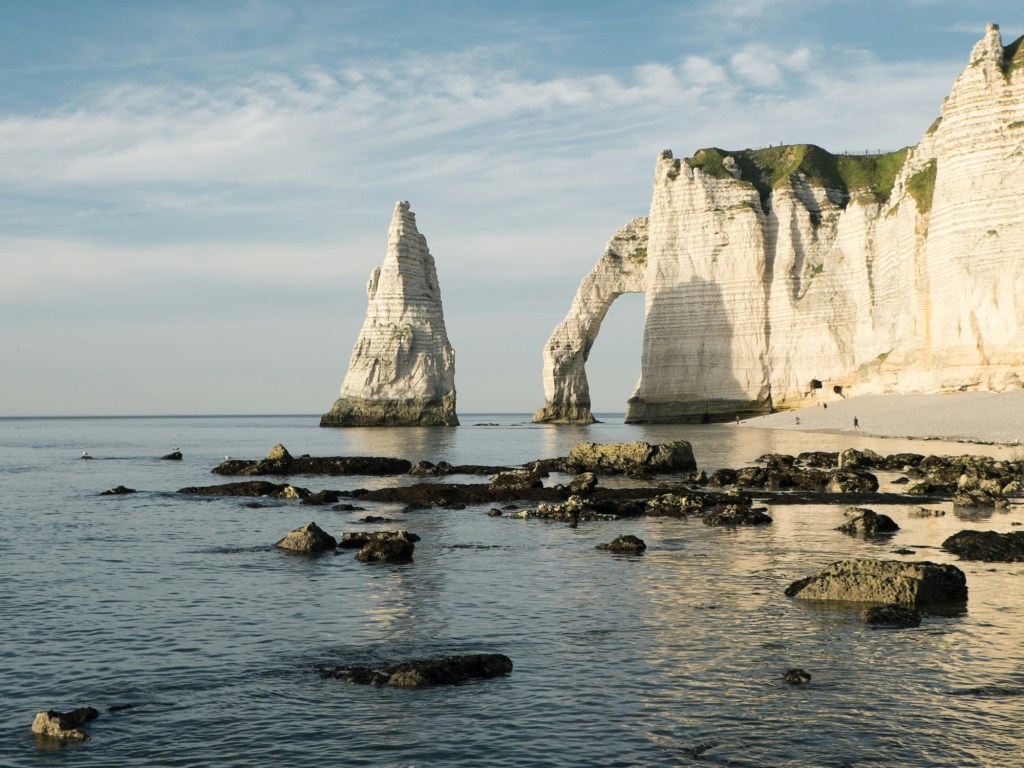
There are places in France that feel more like poetry than geography, and Étretat is one of them. Perched along Normandy’s alabaster coast, this seaside town is framed by chalk-white cliffs that rise like cathedral walls above the sea. Carved by centuries of tides into arches and towers, they stand as monuments to both nature’s strength and elegance.
It’s the kind of view that once captivated artists like Monet, who returned here again and again to paint the shifting light on stone and surf. Writers, too, found themselves drawn to Étretat’s otherworldly scenery—Maupassant set stories here, and legends still cling to the caves and arches like mist. To visit is to step into a story written in salt, stone, and sky.
The Soul of the Village
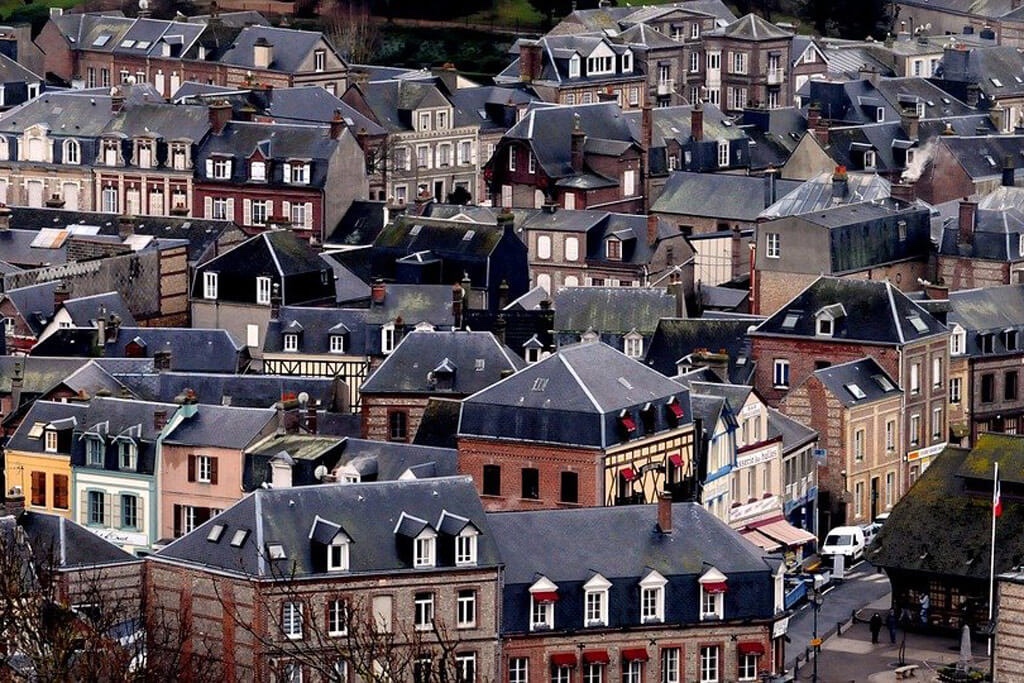
Before you even reach the cliffs, Étretat invites you to linger. The village itself is a storybook of narrow lanes and timbered houses, with shutters painted in sea-worn shades of blue and green. Life here moves at a gentler pace. In the morning, locals gather at the boulangerie, and the smell of fresh baguettes mingles with the salty air. By afternoon, the squares hum with the clink of glasses as cafés spill onto cobblestones.
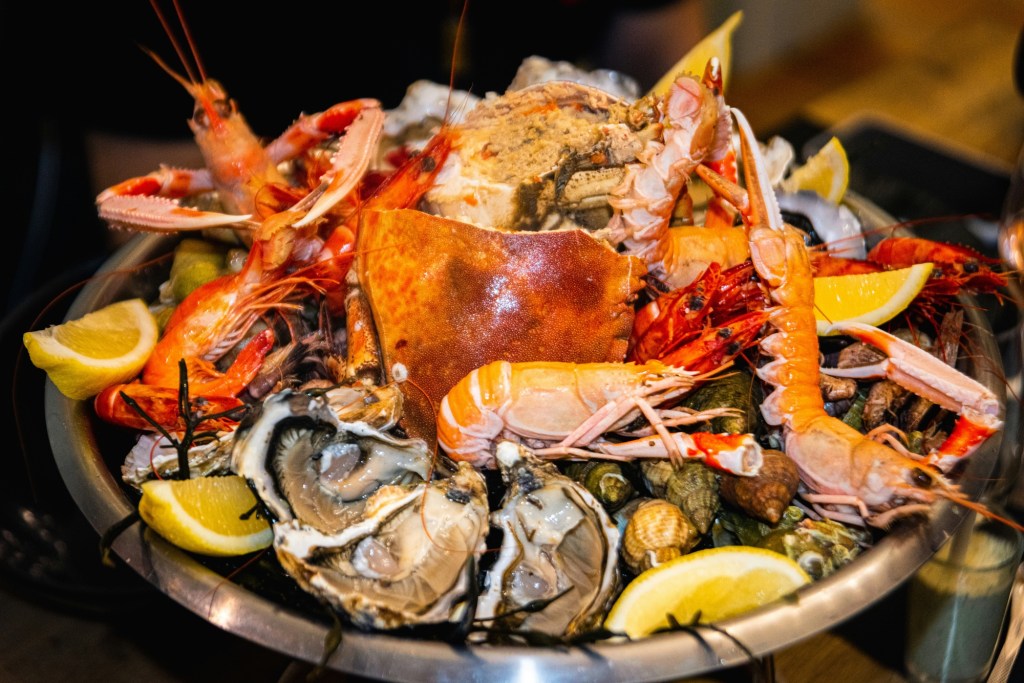
Food in Étretat tastes of the sea and the land that cradles it. Order a steaming pot of mussels, oysters on the half shell, or a savory galette folded with cheese and ham. Normandy’s famous cider and Calvados apple brandy add warmth to any meal. Dining here isn’t simply about eating—it’s about savoring the flavors of a region that has always lived between tide and field.
The White Cliffs
The cliffs are Étretat’s crown jewels, rising high above the pebble beach in luminous layers of chalk. Their forms are so striking they’ve become almost mythic, each one shaped into something that feels intentional, as though sculpted by a patient hand.
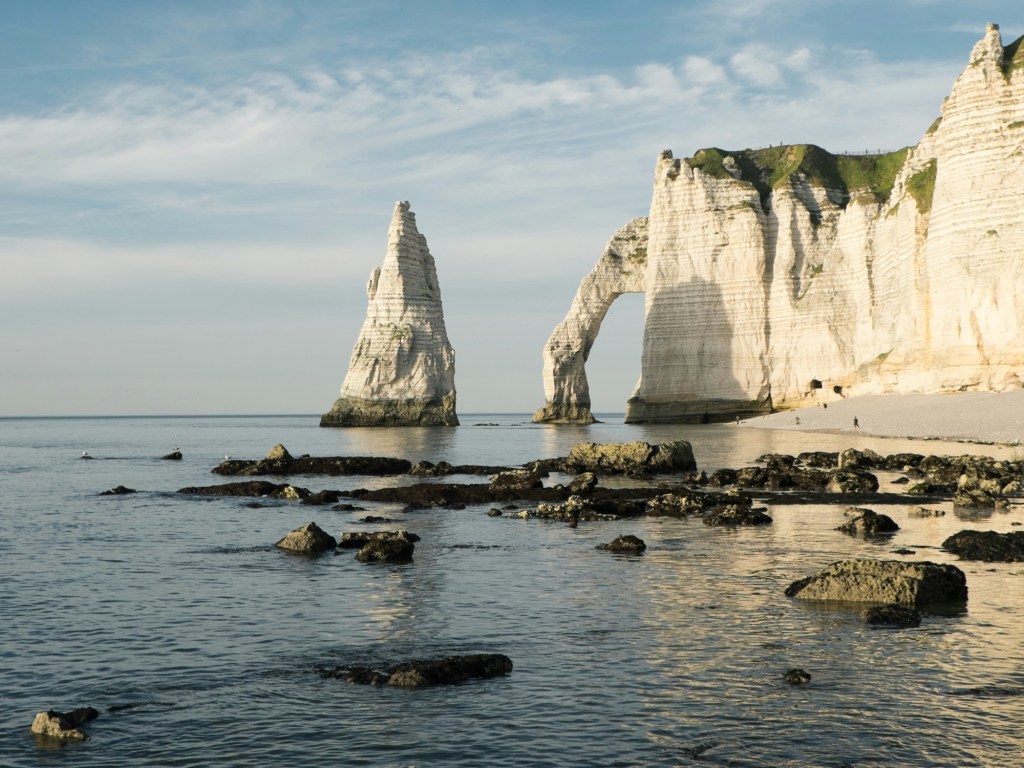
The most iconic is the Porte d’Aval, a sweeping arch that frames the sea like a doorway into infinity. Beyond it stands L’Aiguille, the Needle, a slender limestone spire jutting straight from the waves. From a distance, they look like ruins of some forgotten cathedral, a reminder that nature often outshines the greatest works of man.
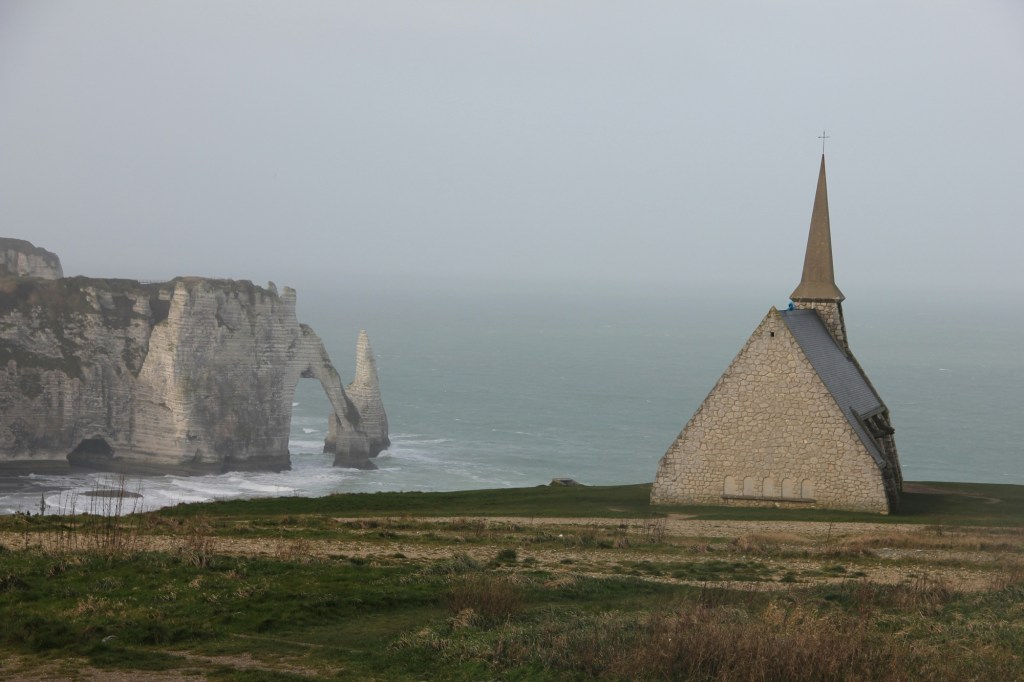
To the east lies the Falaise d’Amont, another dramatic arch best admired from across the bay. Climbing above it, you’ll find the small chapel of Notre-Dame de la Garde, long a place of prayer and protection for sailors setting out on uncertain seas.
Walking the Edge
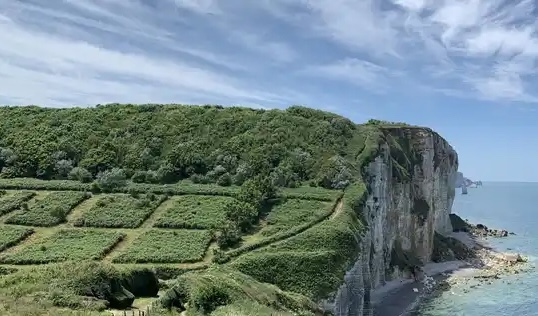
Étretat is best experienced on foot. Trails climb from both sides of town, winding along the cliffs through grassy meadows dotted with wildflowers. The higher you go, the more the horizon opens, until it feels as if you’re standing at the meeting place of earth and sky.
On the clifftop paths, every curve reveals a new perspective: the village tucked below, waves carving lines of foam into the shore, arches shifting from white to gold to violet as the day changes. It’s easy to lose track of time here, caught between the rhythm of footsteps and the crash of the tide far below.
At sunset, the cliffs glow as though lit from within. The sky softens, the chalk burns with color, and silence often falls over those gathered to watch. It is one of those rare moments in travel when beauty silences conversation.
Gardens Above the Sea
High above town, the Gardens of Étretat blend art with landscape in a way that mirrors the drama of the cliffs themselves. Shaped hedges twist into waves and spirals, sculptures peek from behind greenery, and viewpoints open suddenly onto the vast expanse of ocean. The gardens feel both whimsical and contemplative, a modern echo of the artistic spirit that has always lingered here.
It’s a place that invites wandering, where the natural and the manmade merge into something surreal. Just as the cliffs inspired Monet’s brushstrokes, these gardens inspire reflection—an invitation to see the world differently, framed by green walls and endless horizons.
Legends and History
Étretat’s beauty is timeless, but its story is rich with history. Once a modest fishing village, it grew into a fashionable seaside retreat in the 19th century, drawing artists, writers, and Parisian society.
The cliffs also hold a legend: that treasure once hidden by the French king was stashed in caves beneath the arches. This tale inspired Maurice Leblanc, creator of the gentleman thief Arsène Lupin, to weave Étretat into his adventures. Today, fans of Lupin still come to retrace those steps, the town’s mystery woven as tightly into its identity as its scenery.
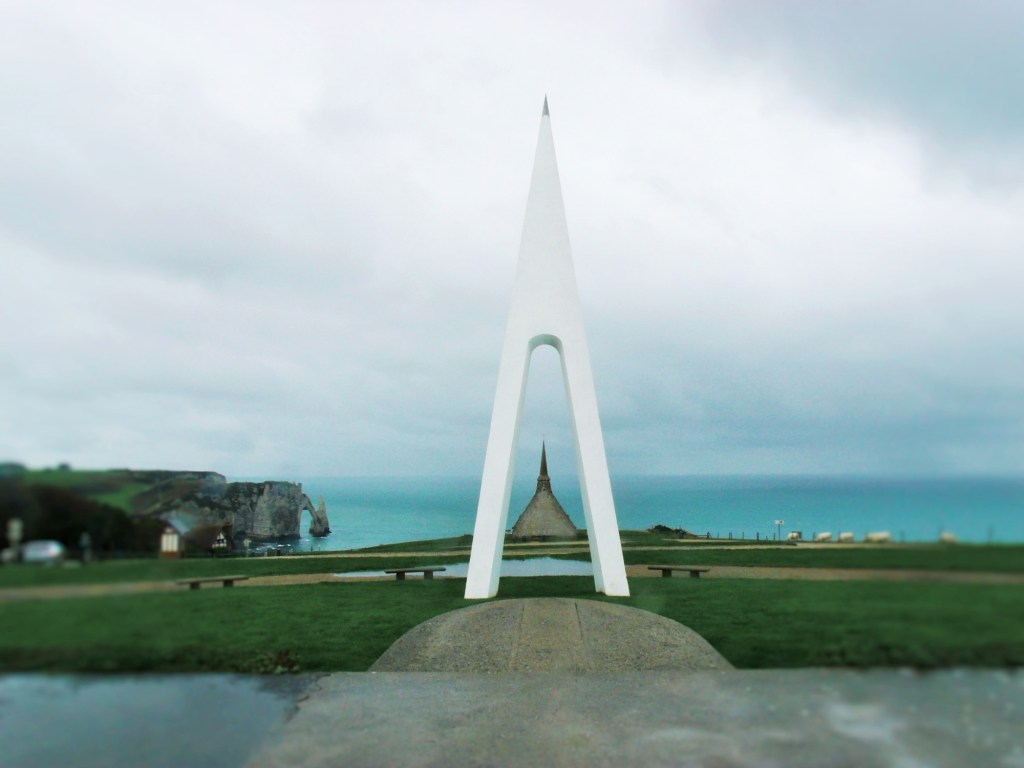
Étretat also has ties to aviation history. In 1927, French pilots Nungesser and Coli attempted to cross the Atlantic in their plane, L’Oiseau Blanc. They vanished after departing from Étretat, sparking decades of speculation. A monument still honors them, a reminder that the cliffs have always been a threshold—not only between land and sea, but between dreams and daring.
Practical Tips for Visiting Étretat
✨ Best Time to Visit
Late spring through early autumn offers the most pleasant weather, with long days perfect for walking the cliffs. For fewer crowds and softer light, September is ideal.
✨ Getting There
Étretat is about a 2.5-hour drive from Paris. You can also take a train to Le Havre or Bréauté-Beuzeville, then continue by bus. Many visit as a day trip from Paris, but staying overnight allows you to experience the cliffs in the quiet of morning and the glow of evening.
✨ What to Pack
Comfortable walking shoes are essential for cliff paths. Bring layers—the coastal breeze can be brisk, even in summer. A rain jacket is wise, as Normandy weather can shift quickly.
✨ Where to Stay
Charming guesthouses and small hotels dot the village, many with views of the cliffs or beach. Staying in the heart of town allows you to walk everywhere. For a more local experience, book a chambre d’hôte with breakfast included.
✨ Don’t Miss
Strolling the pebble beach at low tide. Hiking both the eastern and western cliffs for different perspectives. Visiting the chapel of Notre-Dame de la Garde. Wandering the Gardens of Étretat. Watching the sun set behind the arches.
A Place That Lingers
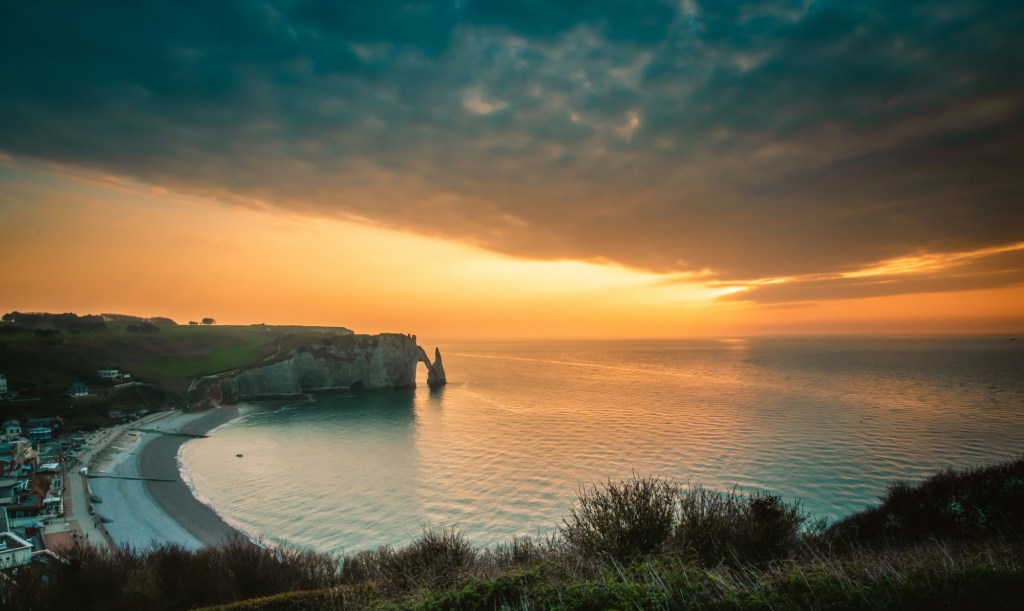
What makes Étretat unforgettable is not only its beauty but the way it stays with you. The cliffs feel alive, shifting with the light, echoing with the endless rhythm of the sea. The village hums softly with life, neither hurried nor still, existing in its own rhythm shaped by tide and time.
Long after you’ve left, the memory of Étretat remains: the sound of gulls carried on the wind, the shimmer of chalk against sky, the golden hush of sunset as the sea swallowed the horizon. To stand here is to be reminded that the world is full of places where nature still writes poetry.
 Bucket List World Travel
Leave a comment