
When the sun sinks behind the mesas and the desert wind grows still, New Mexico unveils one of its greatest treasures — a night sky so clear and infinite it feels like you could fall right into it. This is the Land of Enchantment after dark, where the air turns electric with silence and the Milky Way stretches like a river of light over cactus and sand.
Welcome to New Mexico’s Dark Sky Country — a haven for stargazers, dreamers, and travelers who crave the kind of magic that only happens when the world goes quiet. From remote desert camps to mountaintop observatories, here are the best places to witness the stars where the desert truly meets the sky.
Cosmic Campground International Dark Sky Sanctuary
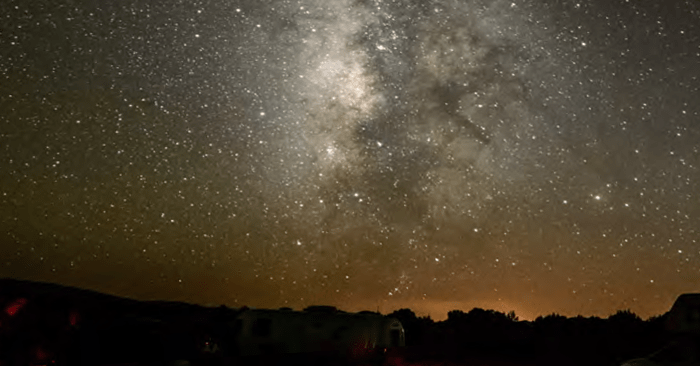
Tucked away in the Gila National Forest in southwestern New Mexico lies one of the darkest places in North America: the Cosmic Campground International Dark Sky Sanctuary.
Designated by the International Dark-Sky Association (IDA), this sanctuary is so remote there’s no artificial light for miles. On moonless nights, the Milky Way blazes so vividly that shadows form from starlight alone.
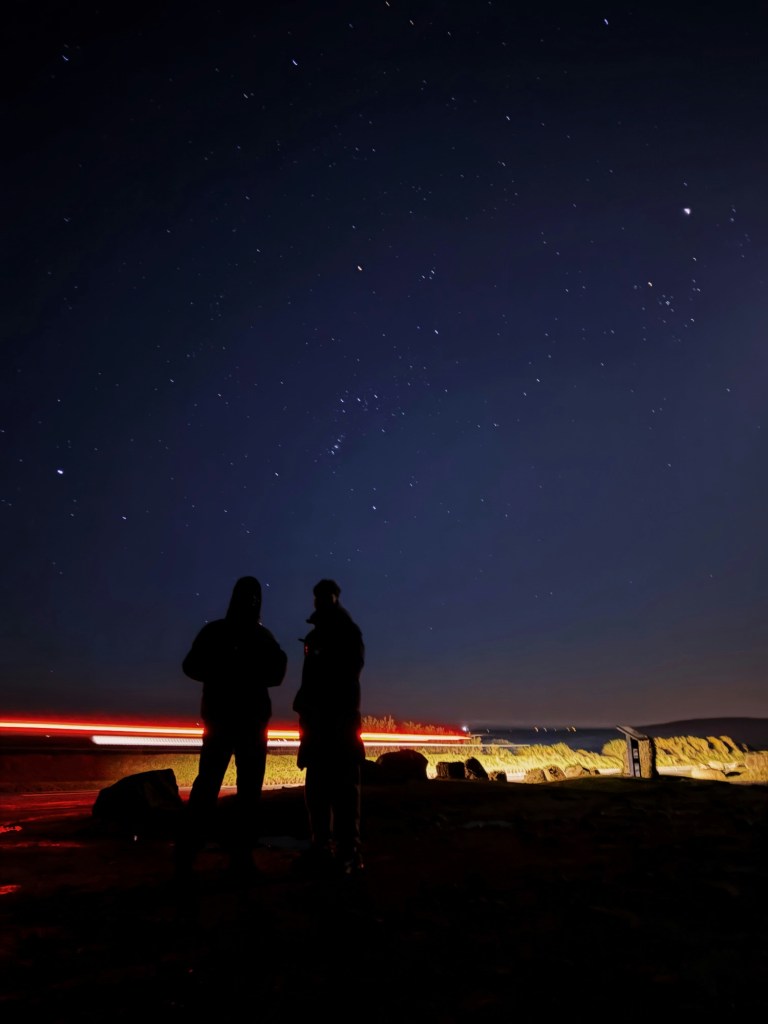
Here, the desert floor becomes your observatory. Four concrete telescope pads, picnic tables, and primitive campsites invite travelers to stay up all night tracing constellations, watching meteors streak across the sky, and listening to coyotes call in the distance.
💡 Travel tip: Bring layers — the temperature drops fast after sunset — and if you have one, a star-tracking app to identify constellations as they rise over the horizon.
Chaco Culture National Historical Park

There are few places where the link between earth and sky feels as spiritual as it does at Chaco Canyon. Once the center of ancient Ancestral Puebloan civilization, this UNESCO World Heritage Site also holds the title of an International Dark Sky Park.
The ancestral Chacoans built their great houses and ceremonial structures aligned perfectly with the stars, solstices, and lunar cycles — an astonishing feat of prehistoric astronomy. Standing among the ruins beneath a sea of stars, you can still feel that cosmic connection.
The National Park Service offers night sky programs and telescope viewings, led by rangers and volunteer astronomers who help visitors interpret the ancient constellations above the ruins.
💡 Don’t miss: Visit in summer when the Milky Way arches directly above Pueblo Bonito, reflecting thousands of years of human fascination with the stars.
Clayton Lake State Park — A Stargazer’s Secret
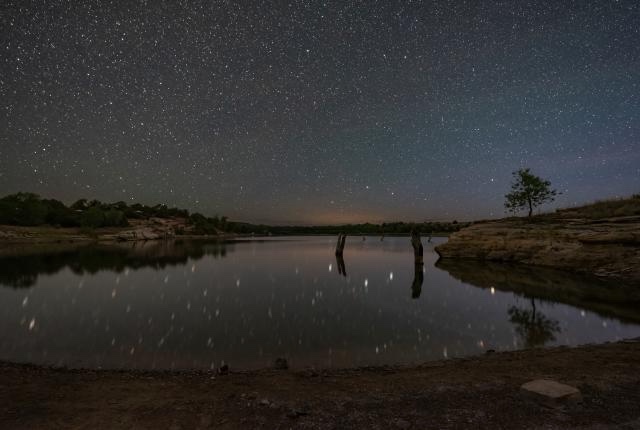
In the far northeast corner of the state, Clayton Lake State Park surprises visitors with both its prehistoric fossils and its breathtaking night sky.
By day, you can walk along the Dinosaur Trackway Trail, where over 500 fossilized dinosaur footprints are preserved in stone. But as night falls, the park transforms into one of New Mexico’s most accessible dark-sky spots.
The lake’s still surface mirrors the constellations above, creating a surreal double-sky effect. The park even built an observatory with a retractable roof, offering guided astronomy sessions for visitors.
💡 Local insight: This is an incredible spot for astrophotography — bring a tripod and a wide-angle lens to capture reflections of the Milky Way over the water.
Salinas Pueblo Missions National Monument
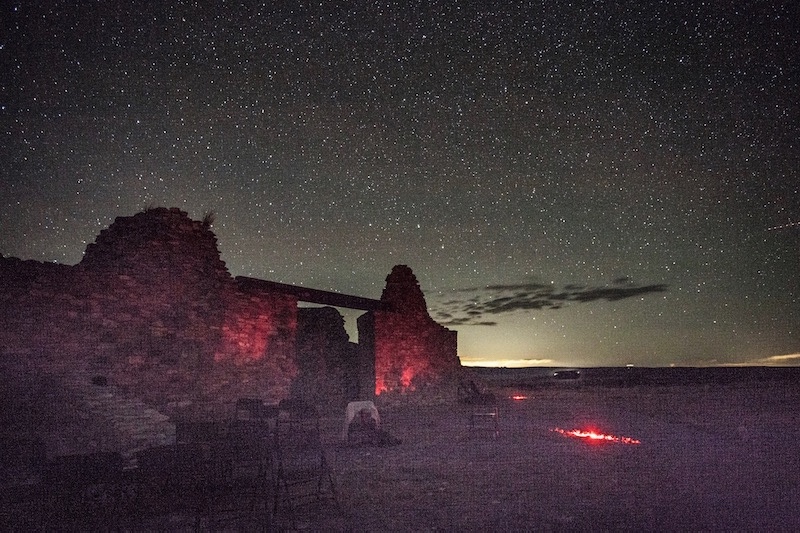
Often overlooked, the Salinas Pueblo Missions near Mountainair tell a story of faith, culture, and time — and by night, they become one of the most hauntingly beautiful dark-sky landscapes in the state.
Among the ruins of the 17th-century mission churches, the stars appear almost within reach. The contrast of red stone against indigo sky is unforgettable, especially under the full sweep of the Milky Way.

Occasionally, rangers host Night Sky Festivals, complete with telescopes and talks about astronomy’s role in Indigenous and colonial life. Even on your own, the solitude here makes stargazing feel deeply personal — the kind of experience that reminds you how small we are under the cosmos.
💡 Photography tip: Frame the mission ruins in the foreground of your Milky Way shots for an unforgettable perspective that blends earth, history, and stars.
City of Rocks State Park — Where Earth Looks Like Another Planet
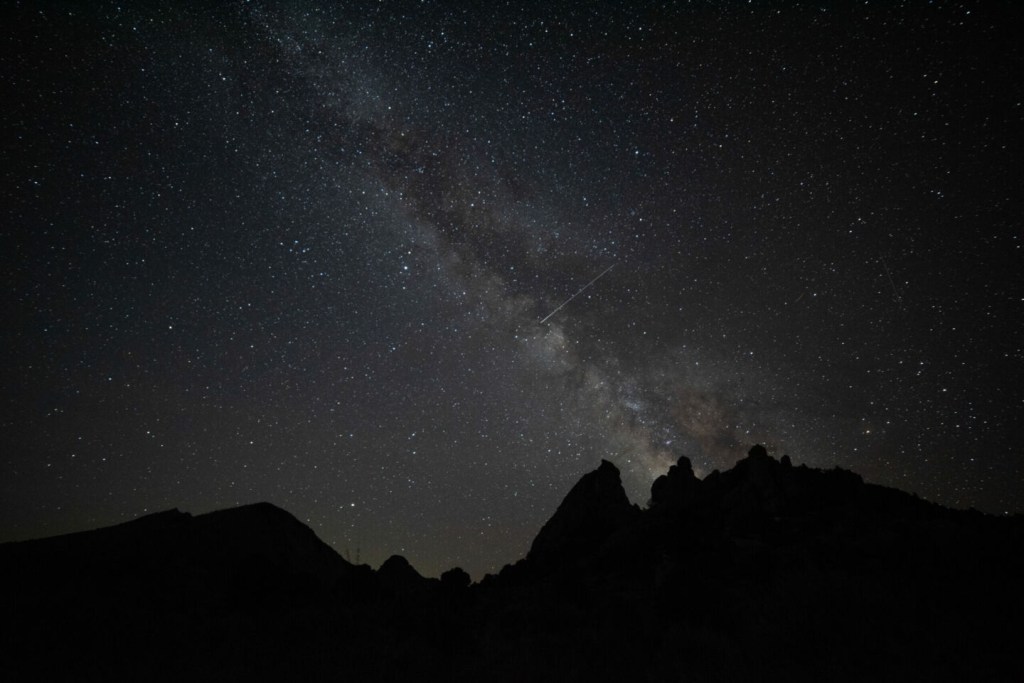
Located between Deming and Silver City, City of Rocks State Park lives up to its name — a surreal landscape of volcanic rock formations rising out of the desert floor like a natural sculpture garden.
When daylight fades, this geological wonder transforms into an otherworldly observatory. The rock spires glow faintly under starlight, and the silence is so deep that you can hear the desert breathe.
The park hosts regular star parties and astronomy events at its small observatory, complete with powerful telescopes and guided sky tours. It’s a favorite among both amateur astronomers and photographers chasing that “Martian desert” look.
💡 Stay the night: Camp among the rocks for front-row seats to the stars — or rent one of the park’s cozy desert yurts for a more comfortable stargazing retreat.
Valles Caldera National Preserve — Stars Over the Highlands
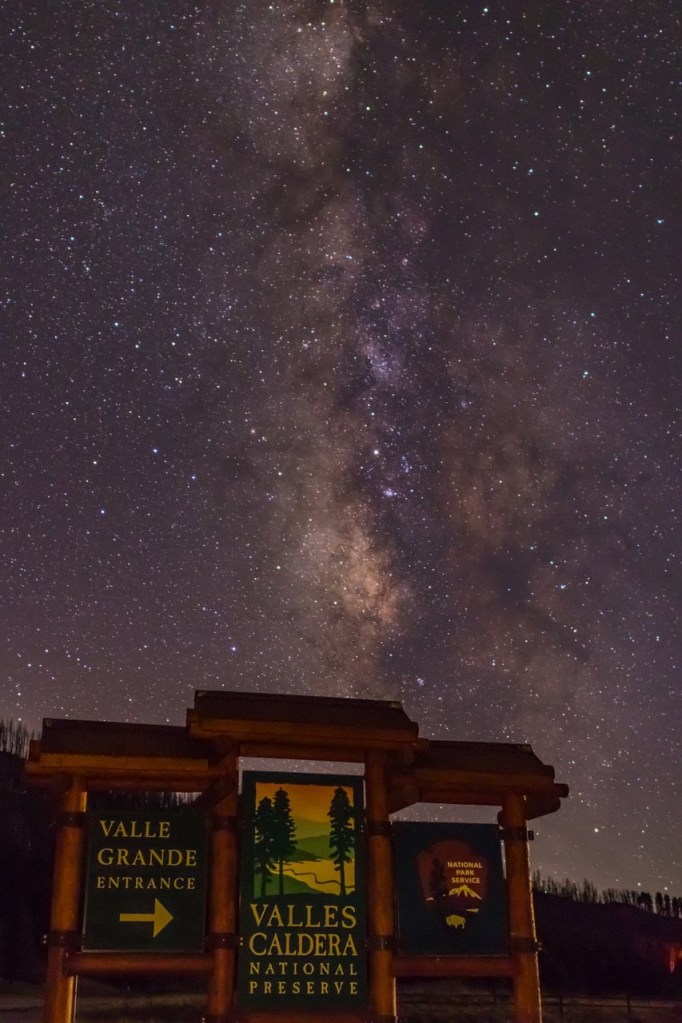
High in the Jemez Mountains, the Valles Caldera offers a completely different perspective — one where alpine meadows and volcanic domes meet an immense, crystal-clear sky.
The altitude (over 8,000 feet) keeps the air thin and clean, creating perfect conditions for stargazing. With almost no light pollution, the stars here shimmer like diamonds against black velvet.
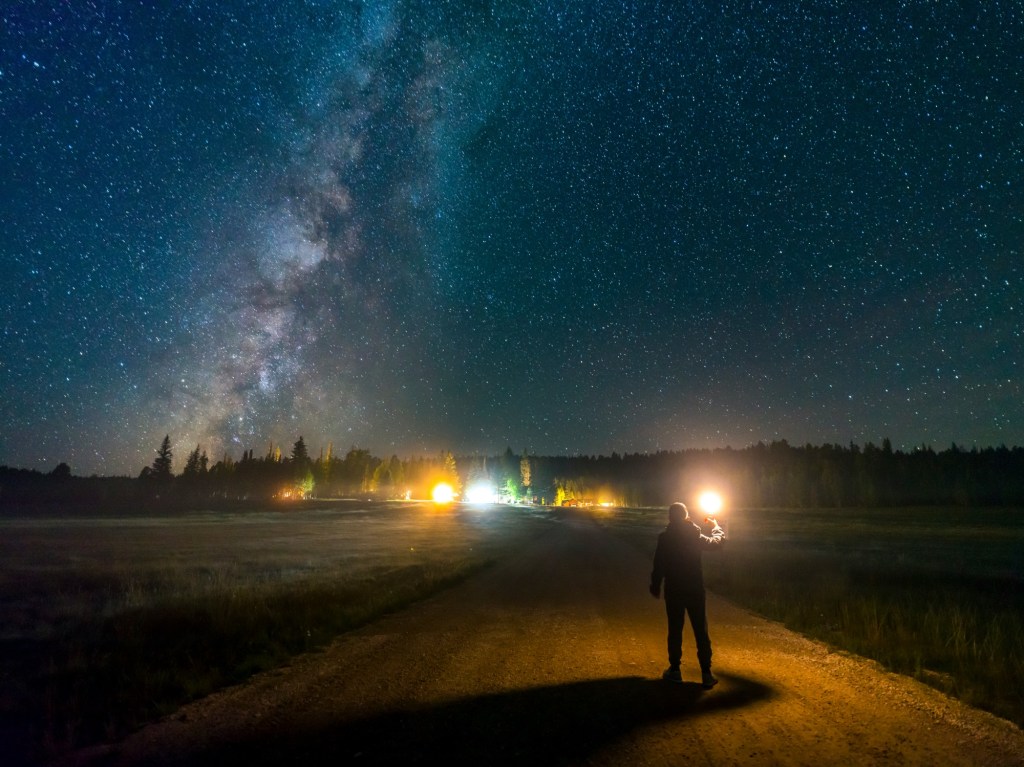
On a moonless night, you can see not just the Milky Way but also the Andromeda Galaxy and the faint glow of distant clusters. For photographers, the vast meadow makes an ideal wide-angle composition — endless sky meeting rolling highlands.
💡 Local tip: Check the calendar for the annual Night Sky Festival, where astronomers set up telescopes and share views of planets, nebulae, and galaxies.
White Sands National Park — A Celestial Desert

Few experiences compare to White Sands National Park after dark. When the crowds fade and the moon rises over waves of alabaster dunes, the entire desert seems to glow.
Though not yet a certified Dark Sky Park, White Sands offers an ethereal setting for moonlit walks and stargazing events hosted by rangers. On moonless nights, the contrast between the white gypsum and deep night sky is breathtaking — a landscape that looks more lunar than earthly.
💡 Photographer’s dream: Capture the dunes illuminated by starlight — long exposures turn this scene into a surreal dance of shadow, sand, and sky.
Taos Plateau — A High-Desert Sky Worth the Climb

In northern New Mexico, the Taos Plateau offers one of the most expansive views of the night sky in the entire Southwest. Stretching out between the Rio Grande Gorge and the Sangre de Cristo Mountains, this high desert feels infinite.
Here, stargazing isn’t just visual — it’s spiritual. The crisp mountain air, the faint howl of the wind, and the distant glimmer of Taos below create a sense of peace and perspective that few places can match.
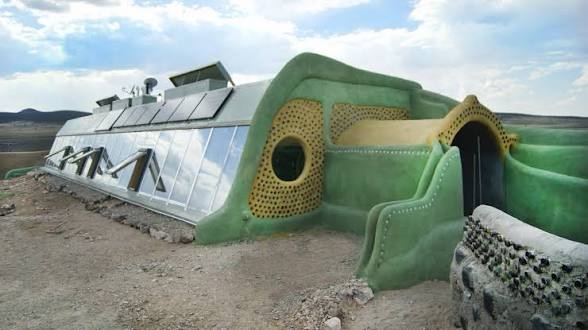
Stay at one of the Earthships — sustainable, off-grid homes built from natural and recycled materials — for a one-of-a-kind stargazing experience right from your bed.
💡 Perfect evening: Watch the last orange light fade from the gorge, then lie back under the stars with a blanket and let the universe unfold.
Tips for Stargazing in New Mexico
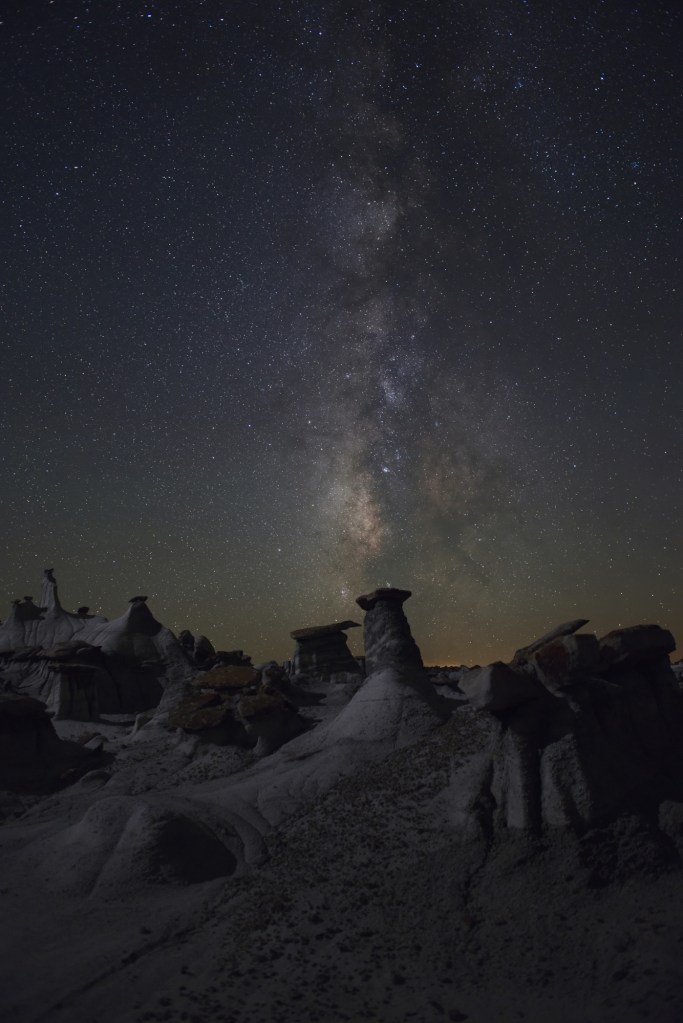
Go during the new moon: Darkness is key for Milky Way visibility — check a lunar calendar before your trip. Bring warm layers: Desert nights can get cold even in summer. Use red light flashlights: They preserve your night vision and keep the magic intact. Arrive before sunset: It’s safer, and you’ll witness golden hour glow before the stars come out. Stay overnight: Many parks offer camping or lodging options — you’ll never want to leave once the stars appear.
Why New Mexico’s Night Sky Feels Different

There’s a reason astronauts, poets, and dreamers have long been drawn to this land. In New Mexico, the night sky doesn’t just sparkle — it breathes. It’s alive with history, with stories written in constellations and whispered through canyon winds.
When you stand beneath it — whether at White Sands, Chaco, or the Cosmic Campground — you can almost feel time expand. The same stars that guided ancient Puebloan astronomers still guide travelers today.
New Mexico’s dark skies remind us that wonder doesn’t require Wi-Fi, tickets, or crowds. It’s waiting in the quiet spaces, where the desert meets the stars — and all you have to do is look up.
 Bucket List World Travel
Leave a comment