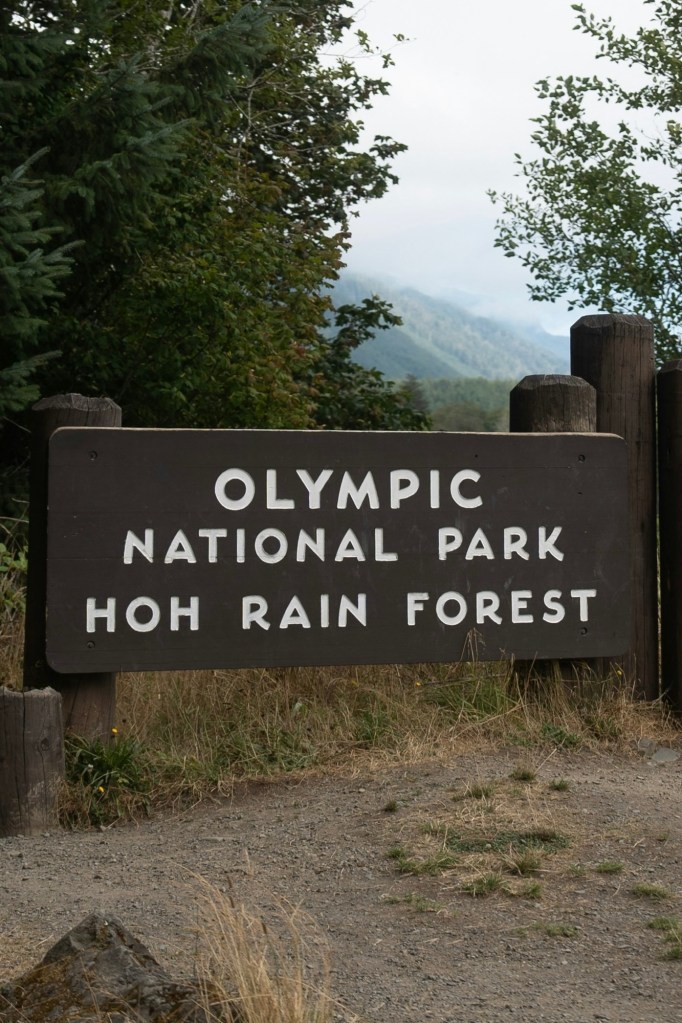
I wasn’t prepared for how quiet the Hoh Rain Forest would feel.
Not silent—just softened. Like the world had the volume turned down. Even the sound of the car door closing felt muted, as if the forest absorbed it before it could echo. Within a few steps, it was clear this wasn’t a place you rush through or “do.” It’s a place you move with.
There’s no overlook or dramatic moment where everything suddenly comes into view. Instead, it unfolds gradually. You walk in, and before you realize it, you’re surrounded—by trees, by moss, by a kind of stillness that feels rare.
This is one of the last temperate rainforests in the continental United States, tucked into Olympic National Park in Washington. But knowing that doesn’t really prepare you for what it feels like to be there.
What the Hoh Actually Looks Like
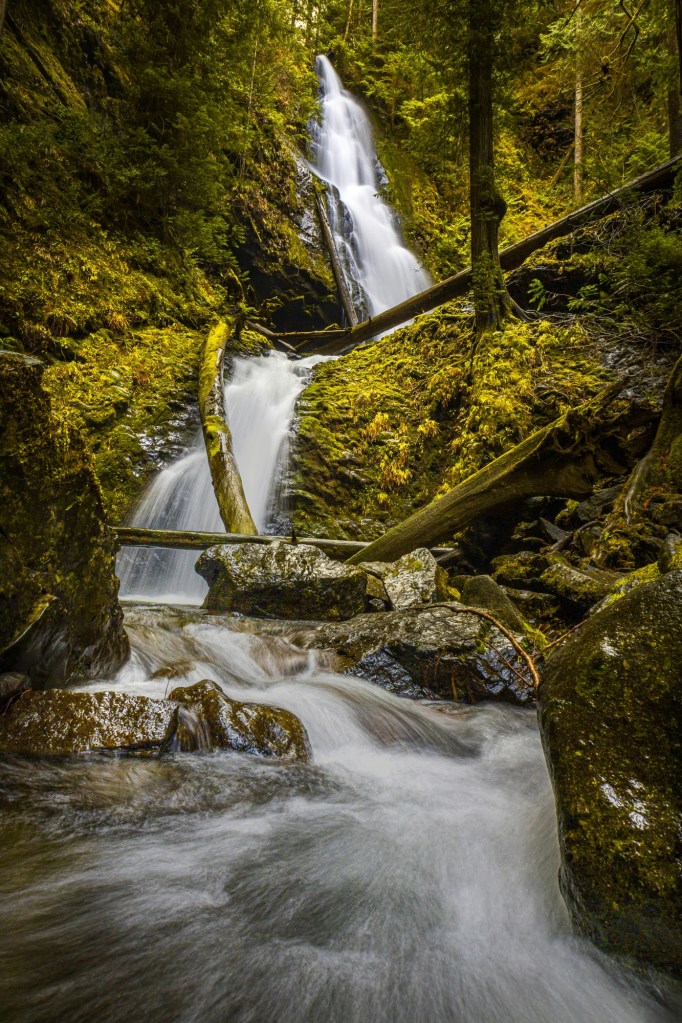
Photos make the Hoh look impossibly green, but being there is different.
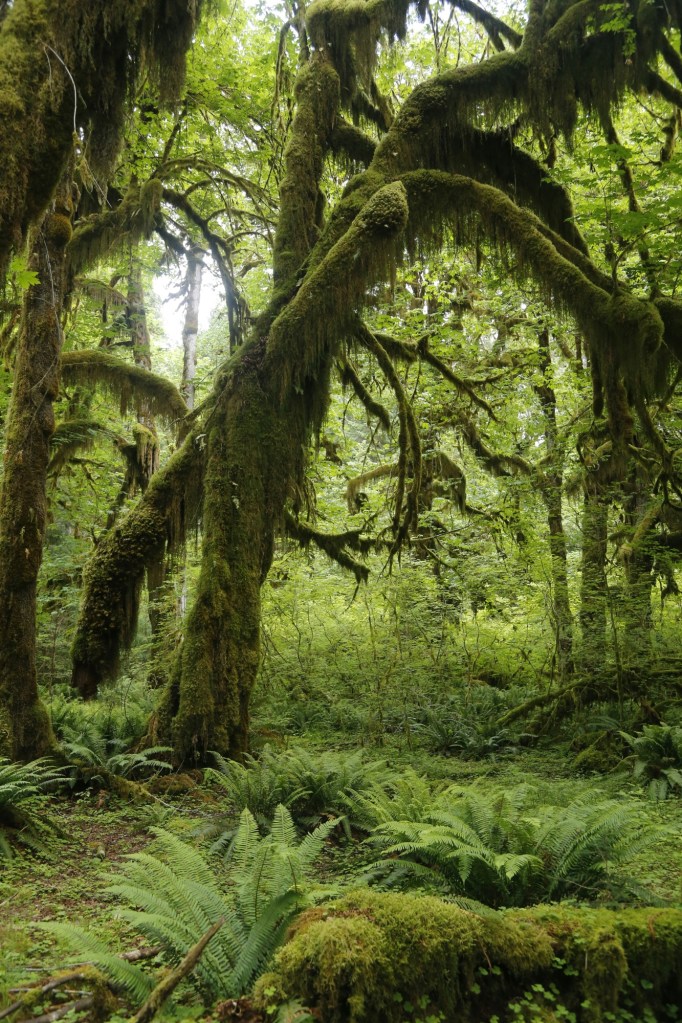
The green isn’t just one shade. It’s layered. Deep emerald moss clings to branches. Lighter, almost yellow-green ferns cover the forest floor. Dark needles, wet bark, and shadows create contrast that shifts constantly as clouds move overhead.
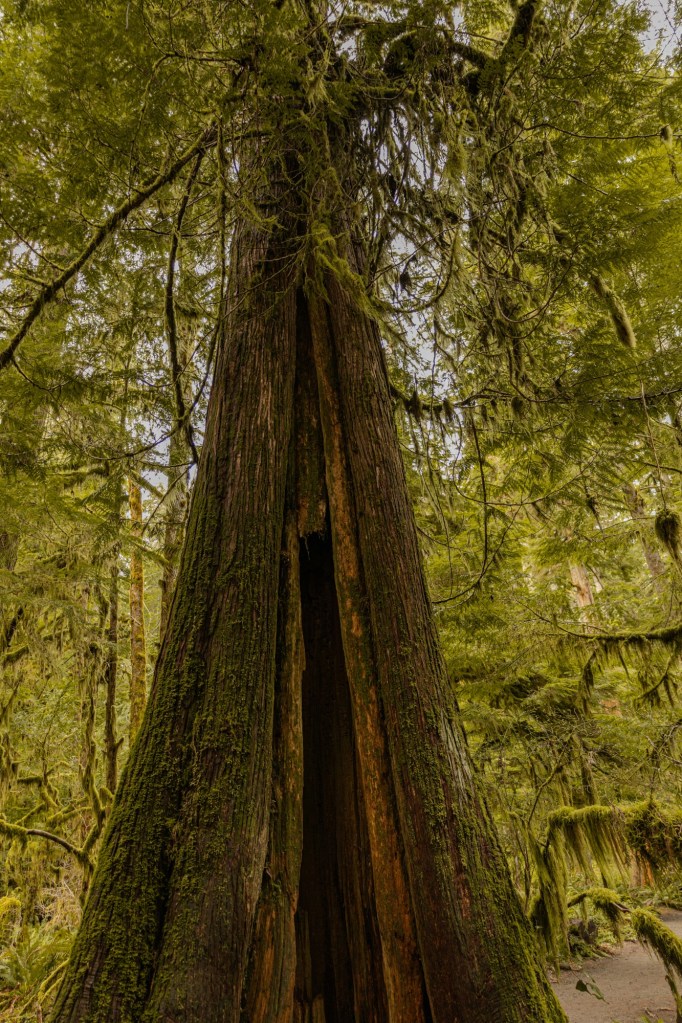
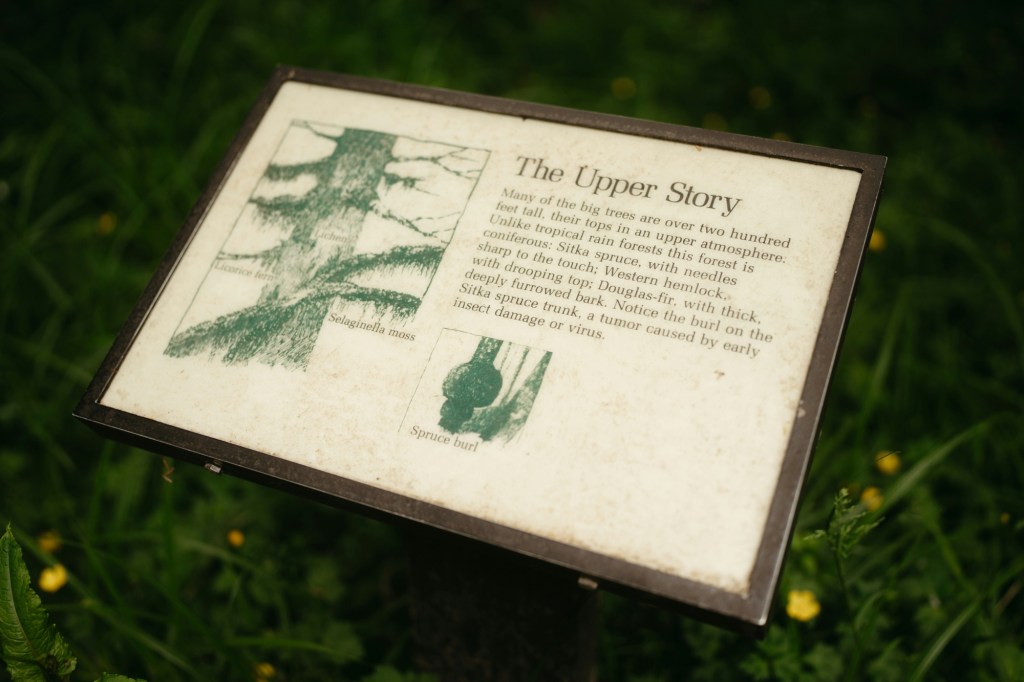
The trees are enormous, but not in a showy way. Sitka spruce and western hemlock rise straight up, while bigleaf maples stretch outward, their branches heavy with moss that hangs like it’s been placed there deliberately. Some of these trees have been growing for hundreds of years, and you can feel that age—not as something intimidating, but something steady.
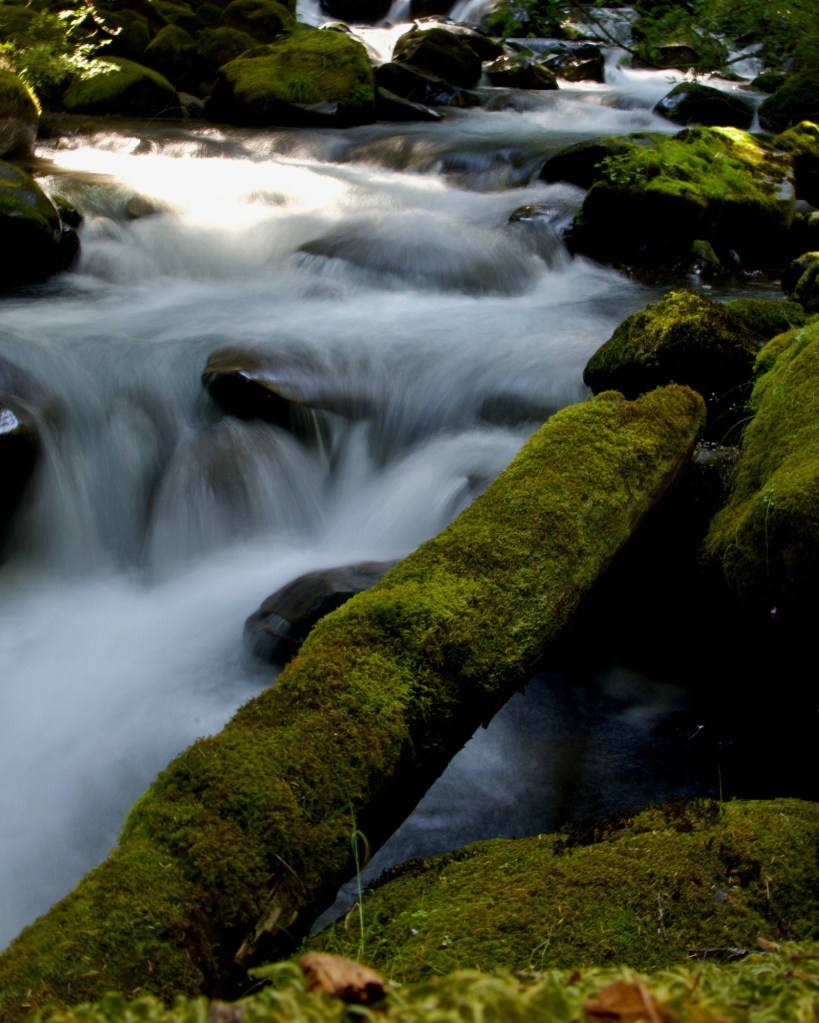
There’s decay everywhere, too. Fallen trees lie across the forest floor, slowly breaking down, covered in new life. You’ll see small trees growing directly out of old logs, using them as support. Nothing here feels wasted or abandoned. It’s all part of the same cycle.
Walking Through It Feels Different
Walking through the Hoh Rain Forest doesn’t feel like hiking most places do.
Your pace naturally slows. The ground is soft, layered with needles and leaves. The air is cooler and damp, even in summer. Light filters through so many layers of branches and moss that it never feels harsh or direct.

Sound behaves differently here. The forest absorbs it. Voices don’t carry far. Footsteps barely register. Even rain, because there’s almost always some form of moisture, doesn’t feel disruptive. It becomes part of the background, like breathing.
I noticed myself stopping often, not because there was something specific to see, but because it felt right to pause. To look closer. To notice how water clung to leaves or how the moss wrapped itself around every surface it could reach.
The Trails Aren’t the Point — Being There Is
The Hoh Rain Forest has well-maintained trails, but the trails aren’t really the point.
Short loops near the entrance make it easy to step into old-growth forest without committing to a long hike. Longer trails follow the Hoh River deeper into the park, gradually changing as elevation and landscape shift.
But no matter which path you choose, the experience is similar. You’re not chasing viewpoints. You’re not trying to “get somewhere.” The forest itself is the destination.
I found that the most meaningful moments weren’t tied to any particular trail feature. They were quiet moments just standing still, listening, watching light change, realizing how long these trees have been here and how briefly I’d pass through.
The Kind of Quiet You Don’t Find Often
One of the strongest impressions the Hoh leaves is its quiet.
Not empty quiet. Not uncomfortable quiet. Just a steady, grounded stillness.
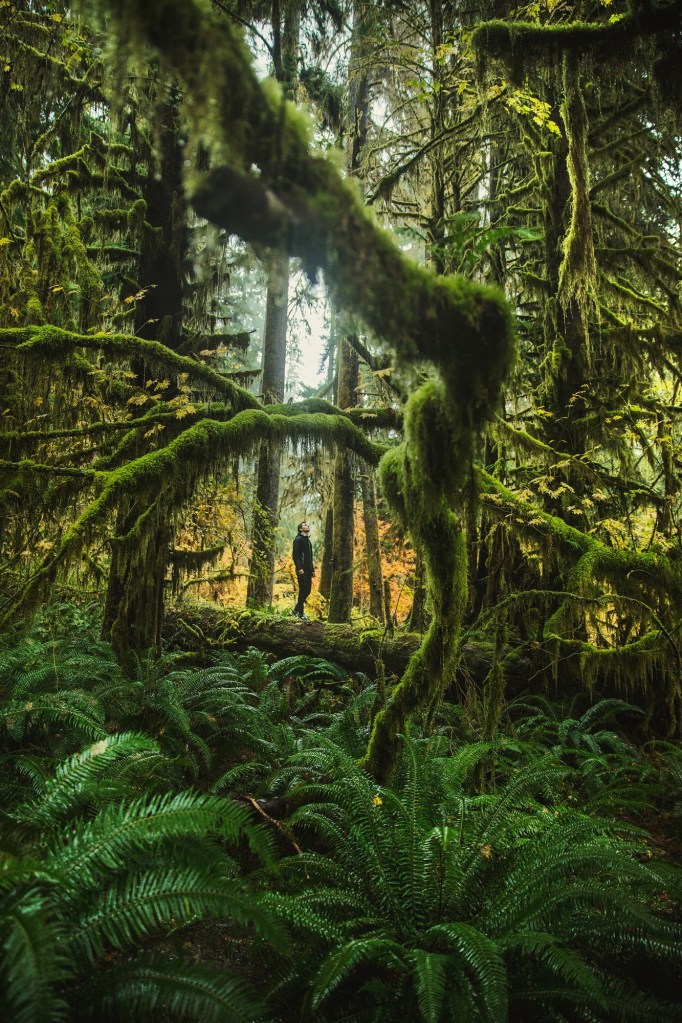
The moss plays a huge role in this. It absorbs sound, softens edges, dampens movement. Even when other people are nearby, the forest doesn’t feel crowded or loud. Everyone seems to instinctively lower their voice.
That quiet does something to you. It makes you aware of your breathing. Your thoughts slow down. You stop thinking about what you need to do next and start noticing what’s happening right now.
It’s rare to find a place that encourages that without effort.
Wildlife Exists Here on Its Own Terms
The Hoh Rain Forest is full of wildlife, but it doesn’t feel like a place designed for sightings.
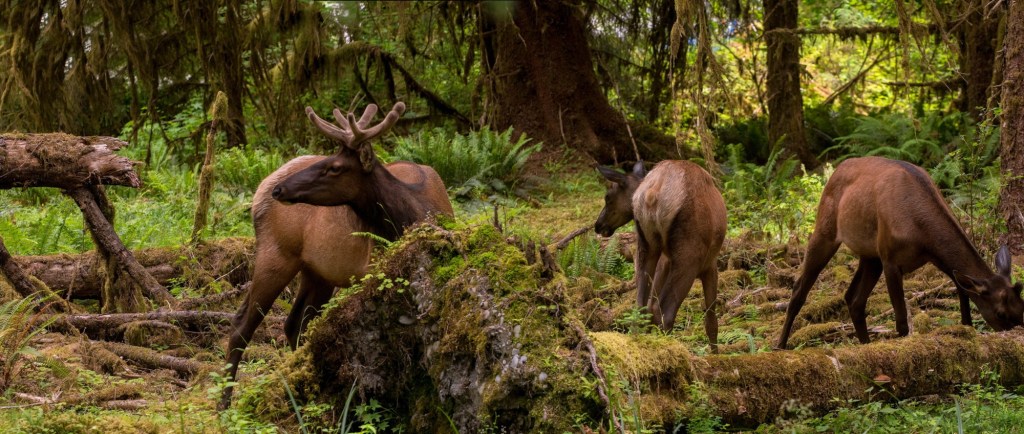
Roosevelt elk live here and are often seen near the river or in open areas. Black bears are present, though they’re more elusive. Birds are everywhere, though many stay hidden high in the canopy.
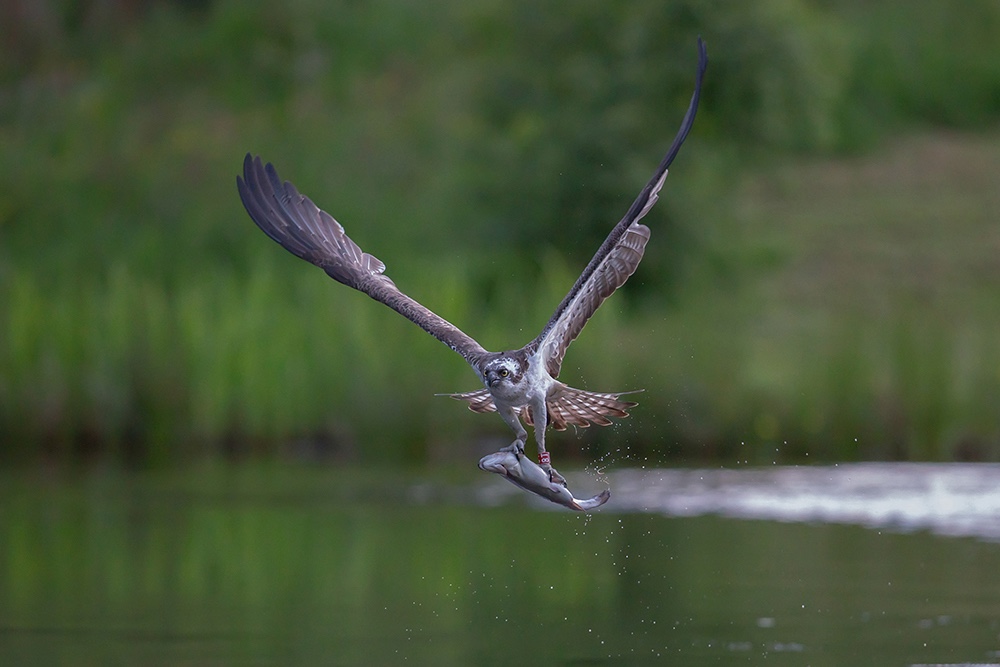
What stood out to me was how unbothered everything seemed by human presence and how little the forest felt shaped around us. There are no feeding areas, no performances, no guarantees.
Rain Isn’t a Problem — It’s the Reason
It’s impossible to talk about the Hoh without talking about rain.
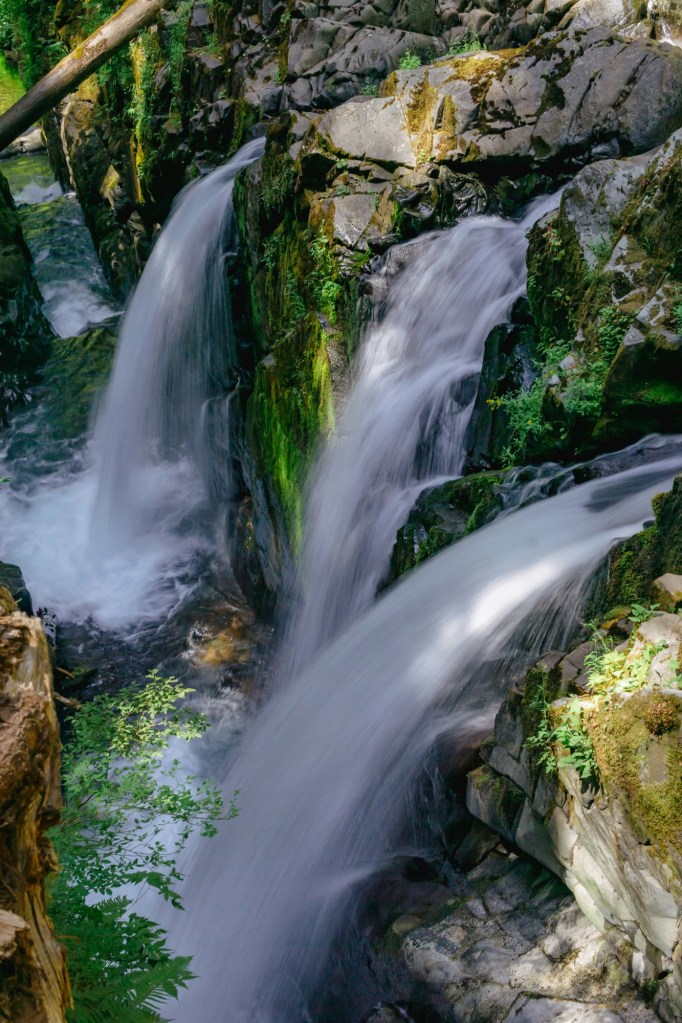
This area receives more than twelve feet of rainfall a year, and that moisture is the reason the forest exists as it does. The moss, the ferns, the towering trees all depends on it.
Going in expecting rain changes your mindset. You stop hoping for perfect weather and start appreciating the atmosphere it creates. Mist clings to branches. Colors deepen. The forest feels more alive, not less.
When to Visit (And What That Really Means)
Summer is the most popular time to visit, mostly because it’s easier. Trails are drier, days are longer, and access is more reliable. Even then, the forest stays cool and shaded.
Spring and fall feel quieter. The forest is lush year-round, but these seasons bring fewer people and more mood with mist, softer light, and a slower pace.
Winter is a different experience altogether. Rain is frequent, access can be limited, and conditions are unpredictable. But for those prepared, it’s deeply peaceful.
No season is wrong. The forest doesn’t really change its character but reveals different sides of itself.
A Few Things Worth Knowing Before You Go
You won’t have reliable cell service. That’s not an inconvenience but part of the experience. Download anything you need ahead of time.
Arrive early if you can, especially in summer. Parking fills up quickly, and the forest feels most calm in the morning.
Wear waterproof shoes and layers, even if the forecast looks clear.
Stay on the trails. The moss and plant life are incredibly fragile, and damage can last decades.
Most importantly, don’t rush it. The Hoh isn’t a place you squeeze between other stops.
Leaving Feels Noticeable
Leaving the Hoh Rain Forest feels different mostly because of how quickly everything changes.
You get back in the car and the quiet is gone almost immediately. The road is louder. You are moving again instead of walking. It is not dramatic. It is just noticeable.
What stays with you is not a specific moment or view. It is the pace. In the forest, you walked slowly without trying to. You did not check your phone very often. You stopped because something caught your attention, not because a sign told you to.
Later, when you are back in regular routines, that contrast shows up. Things feel faster. Louder. More crowded. The memory of the Hoh becomes a reference point for what calm actually felt like.
The forest does not follow you home. It does not change your life. But it does reset your sense of pace in a way you notice afterward, and that is why it stays with you.
 Bucket List World Travel
Leave a comment